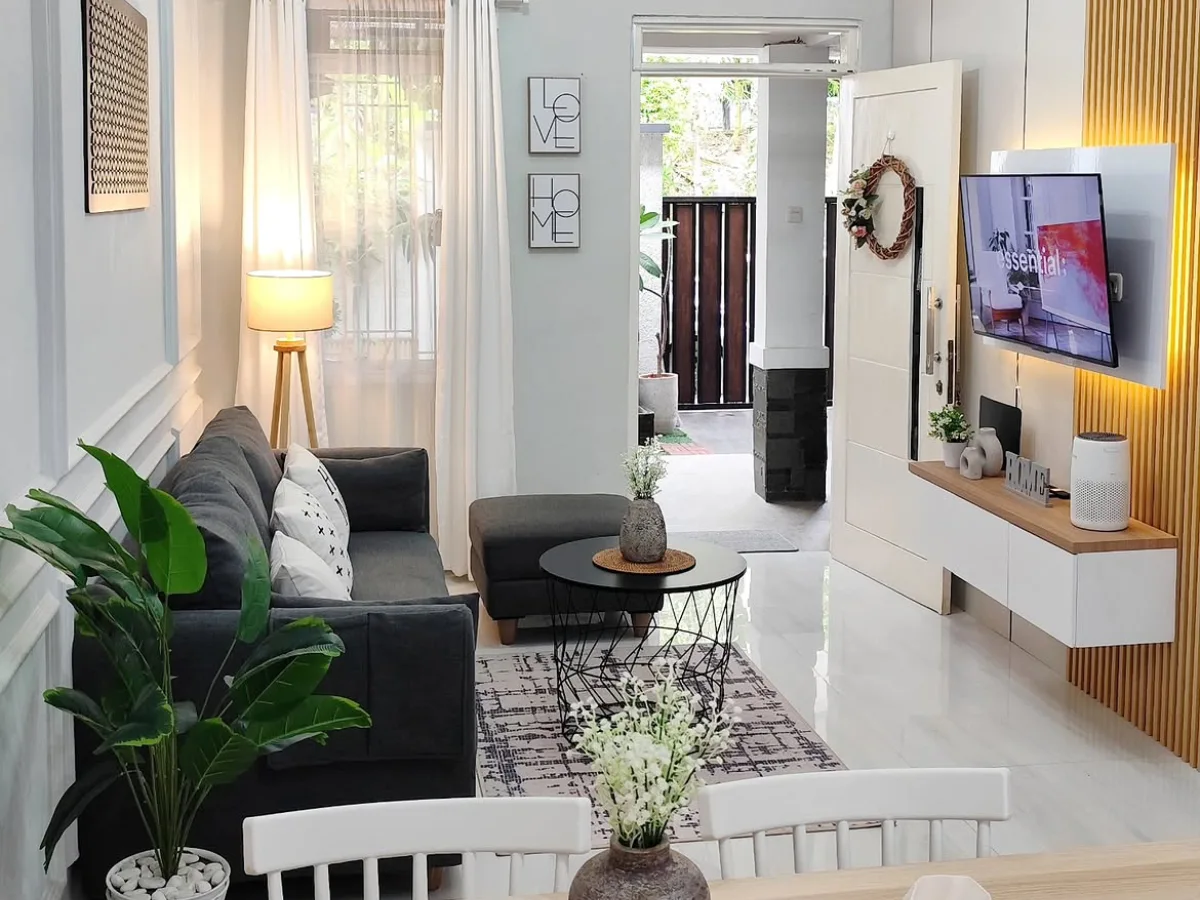
A small living room can still feel open, comfortable, and stylish. The key is making every inch work without making the space feel crowded. From smart furniture choices to simple layout tricks, these small living room ideas will help you create a room that feels bigger and more inviting.
Make a Small Room Feel Bigger
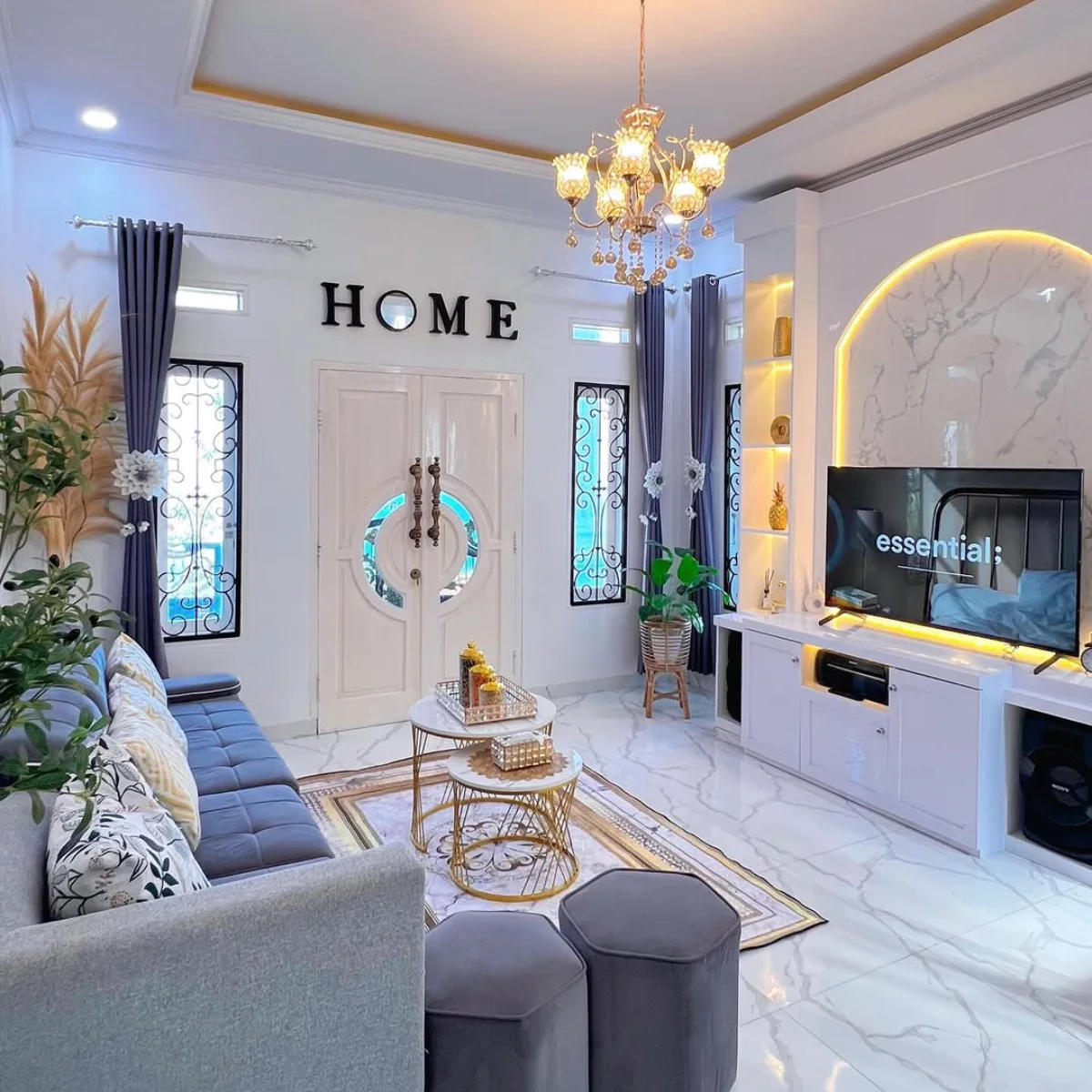
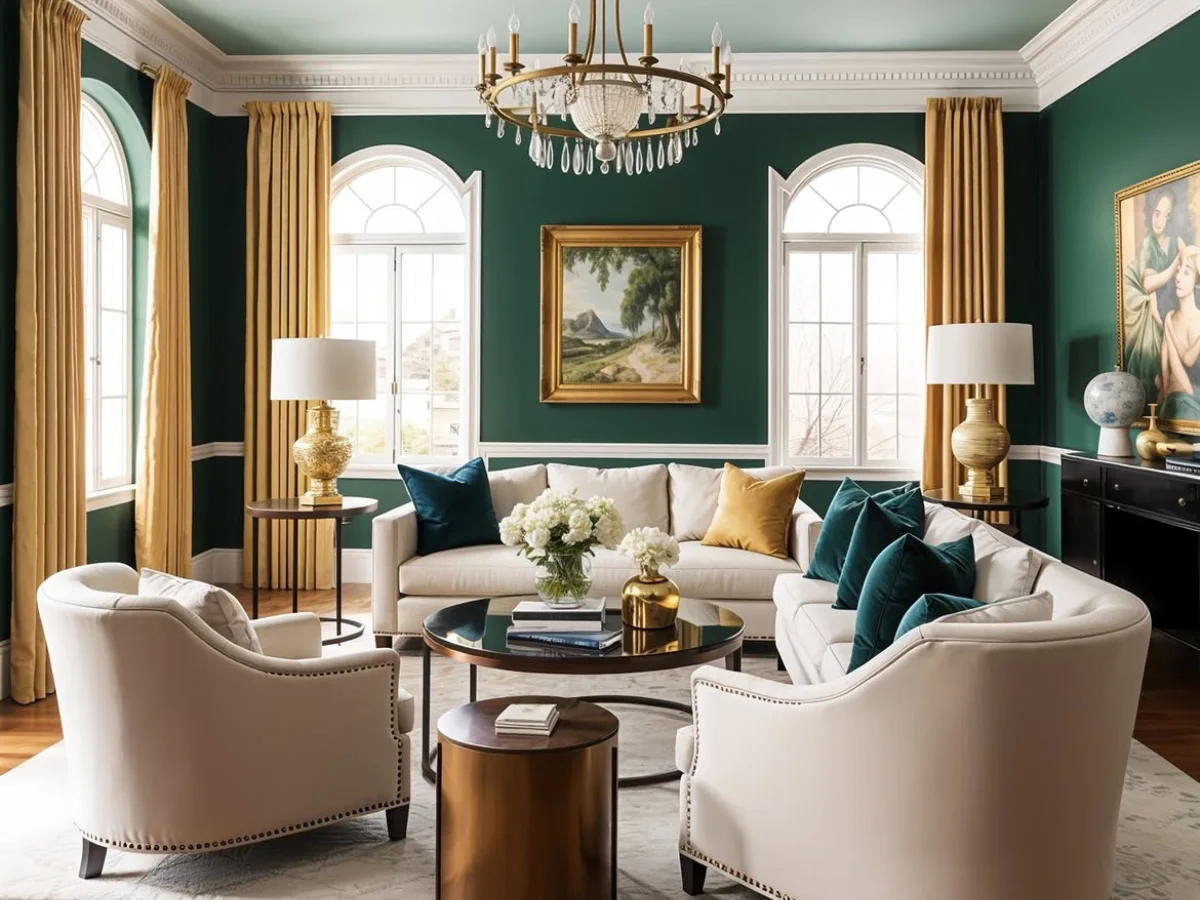
A light color palette, streamlined furniture, and reflective surfaces keep this compact living room feeling surprisingly open. The gold details add personality without taking up valuable floor space.
Use Light Colors to Open Up the Room
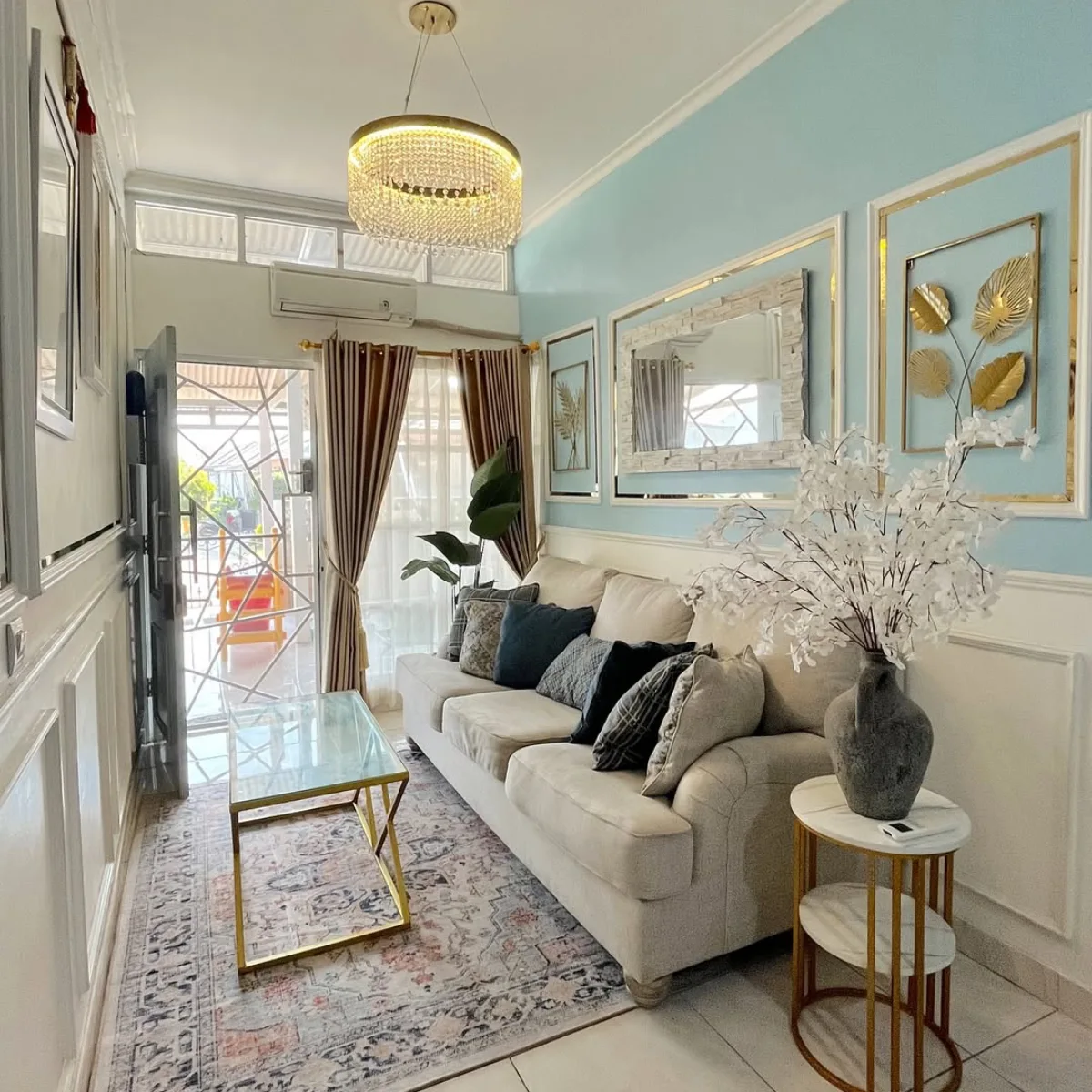
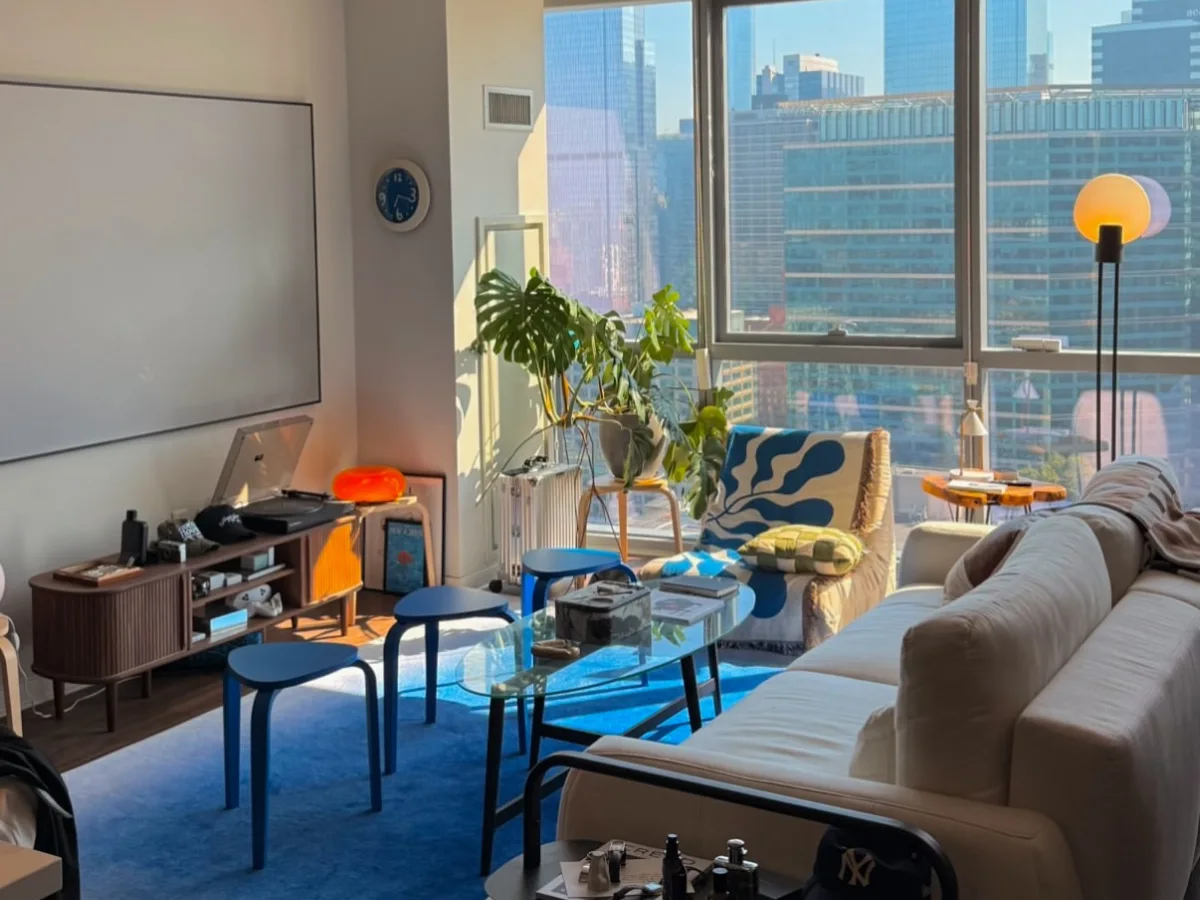
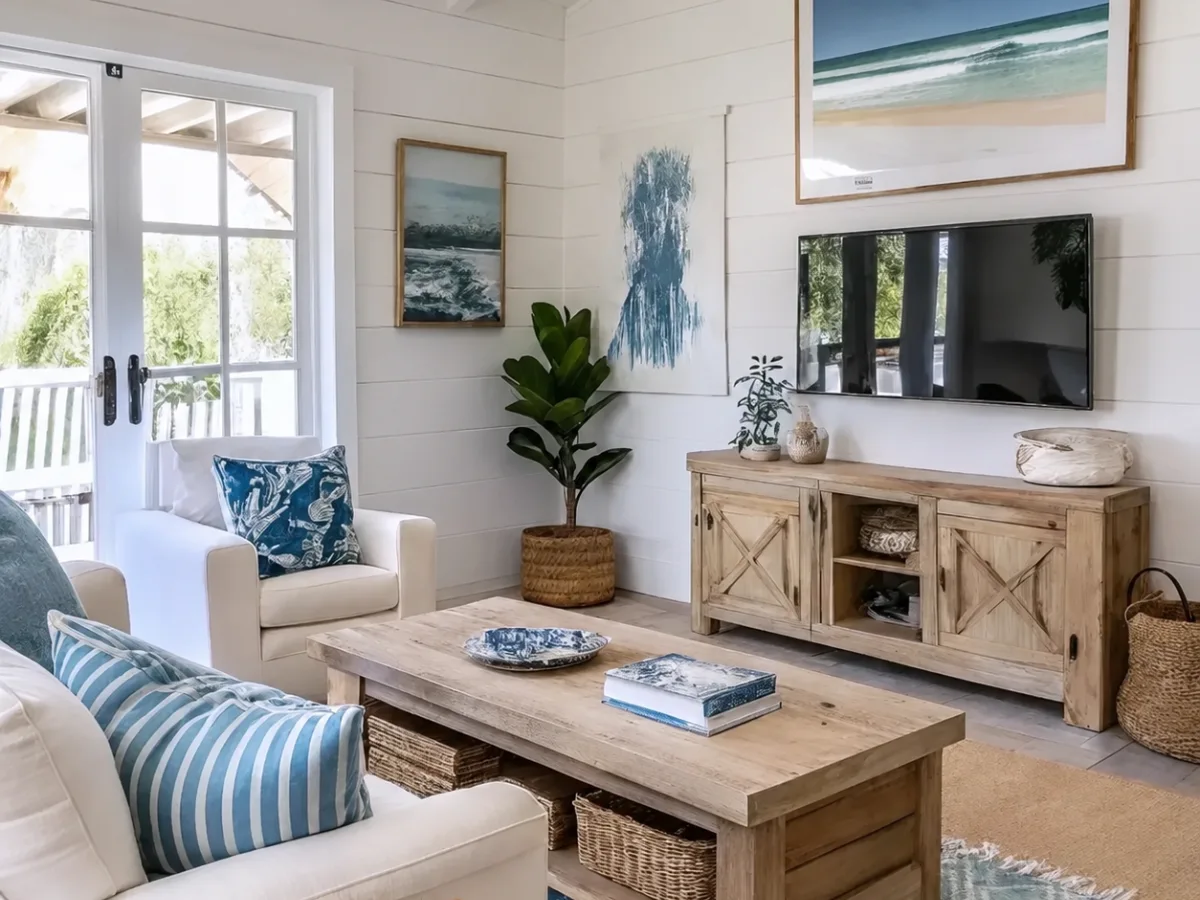
Soft blue walls and a cream sofa create an airy backdrop in this narrow living room. Keeping the larger pieces light helps the space feel less enclosed while still leaving room for decorative touches.
Choose Furniture That Fits the Layout
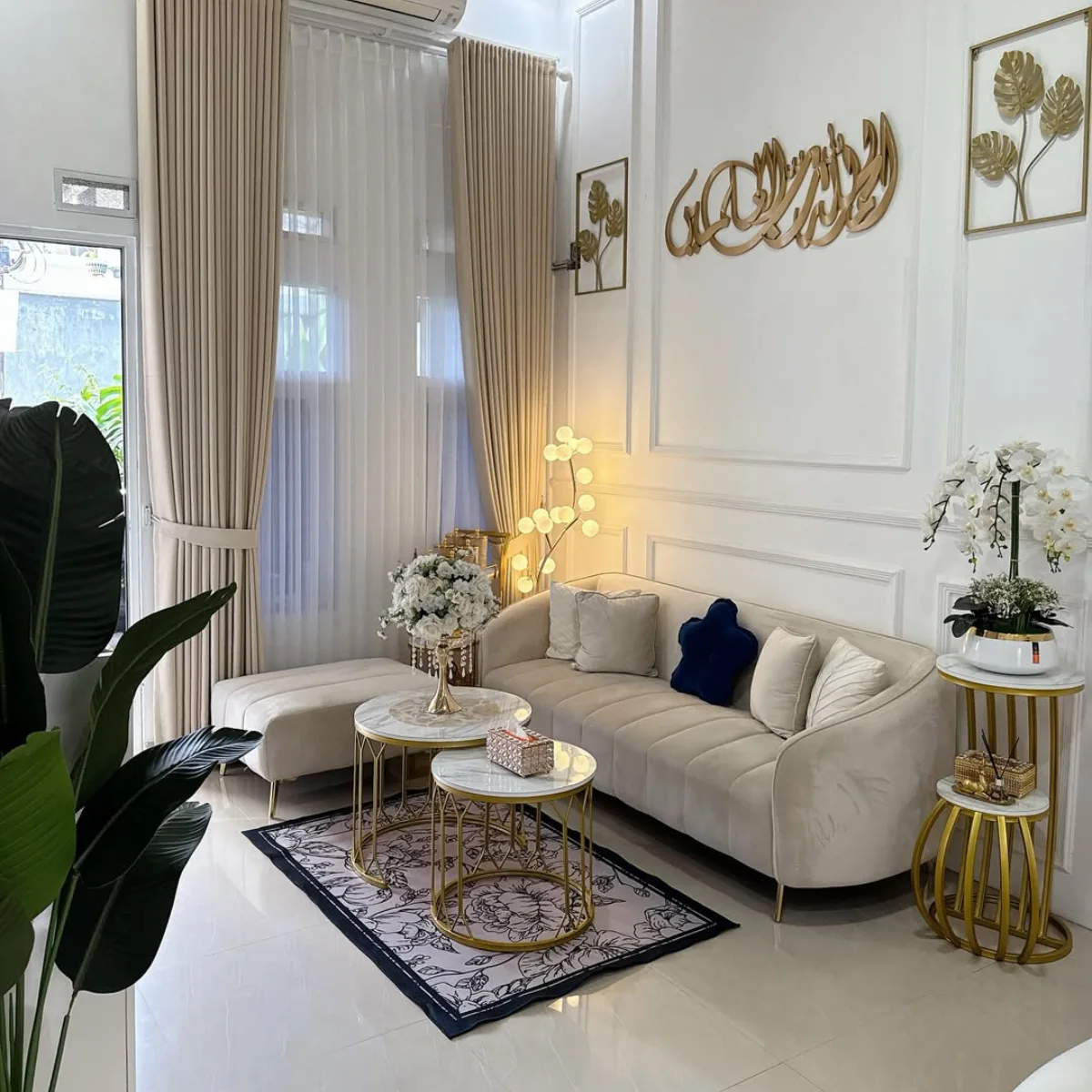
This compact seating arrangement makes good use of a tight corner without sacrificing comfort. A small sectional follows the room's shape, while nesting tables provide useful surfaces without creating unnecessary visual clutter.
Let the Walls Do the Decorating
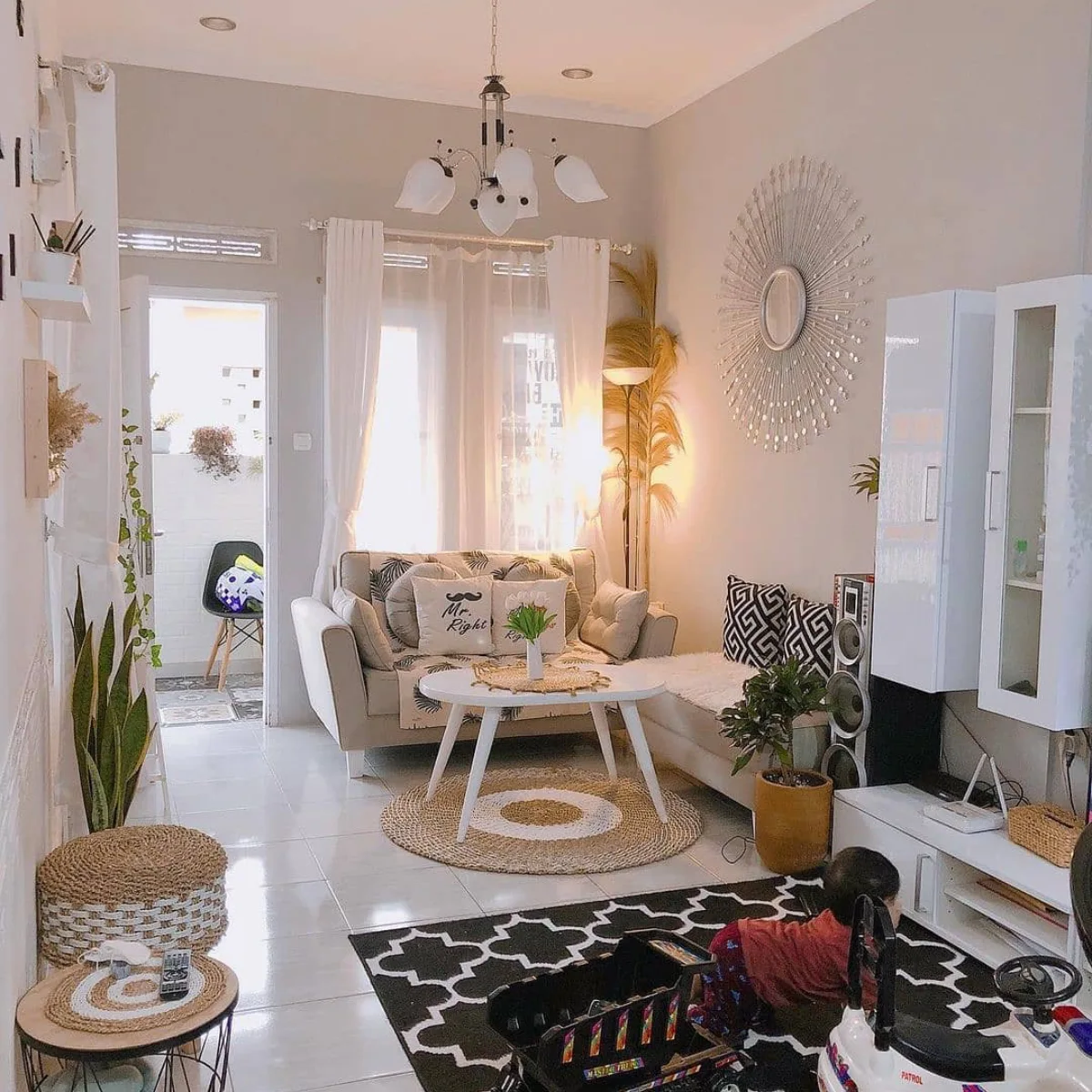
When floor space is limited, decorative walls can carry more of the room's personality. Framed art, a round mirror, and a few plants add interest here while keeping the seating area relatively uncluttered.
Keep the Center of the Room Open
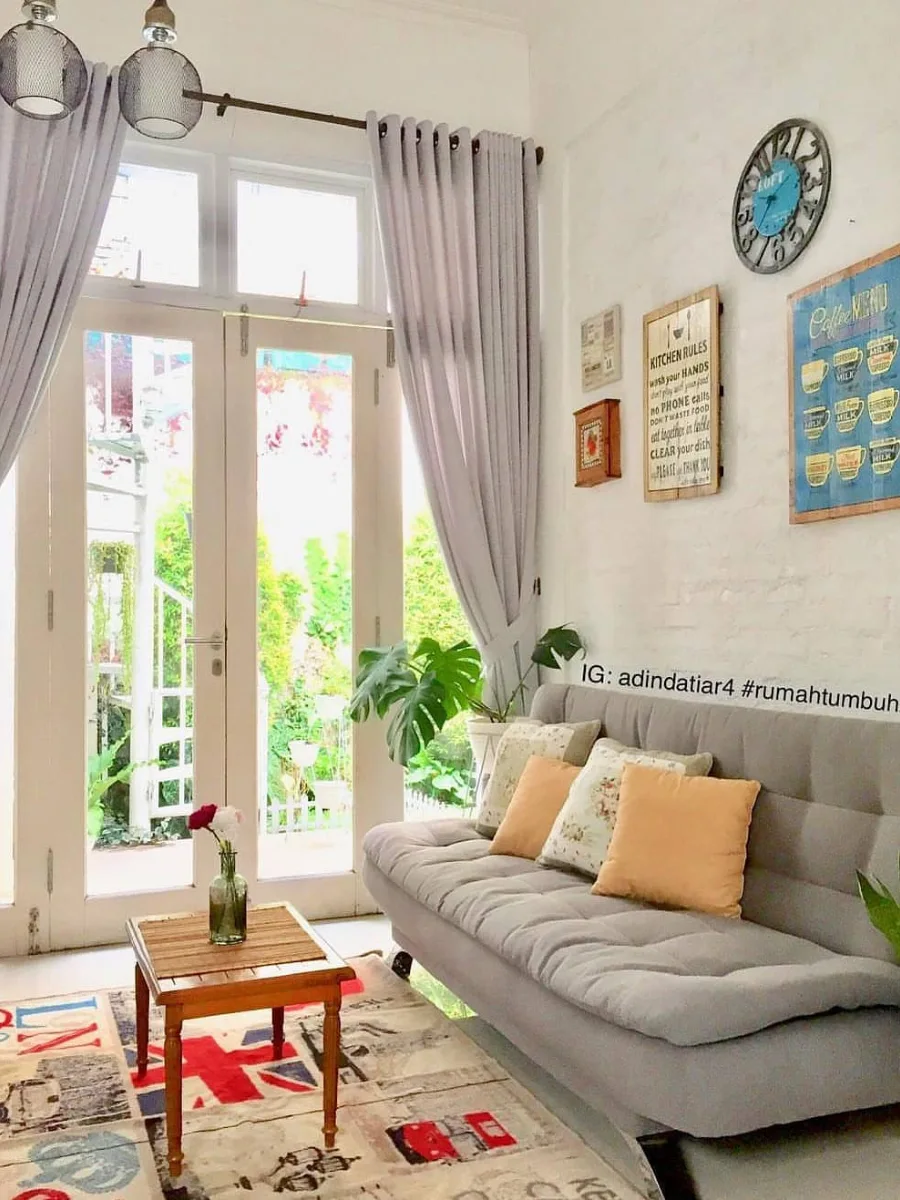
A compact sofa and simple round coffee table leave a clear path through this cozy living room. The open floor area makes the room easier to move around and gives the seating zone a relaxed feel.
Add Style Without Overcrowding
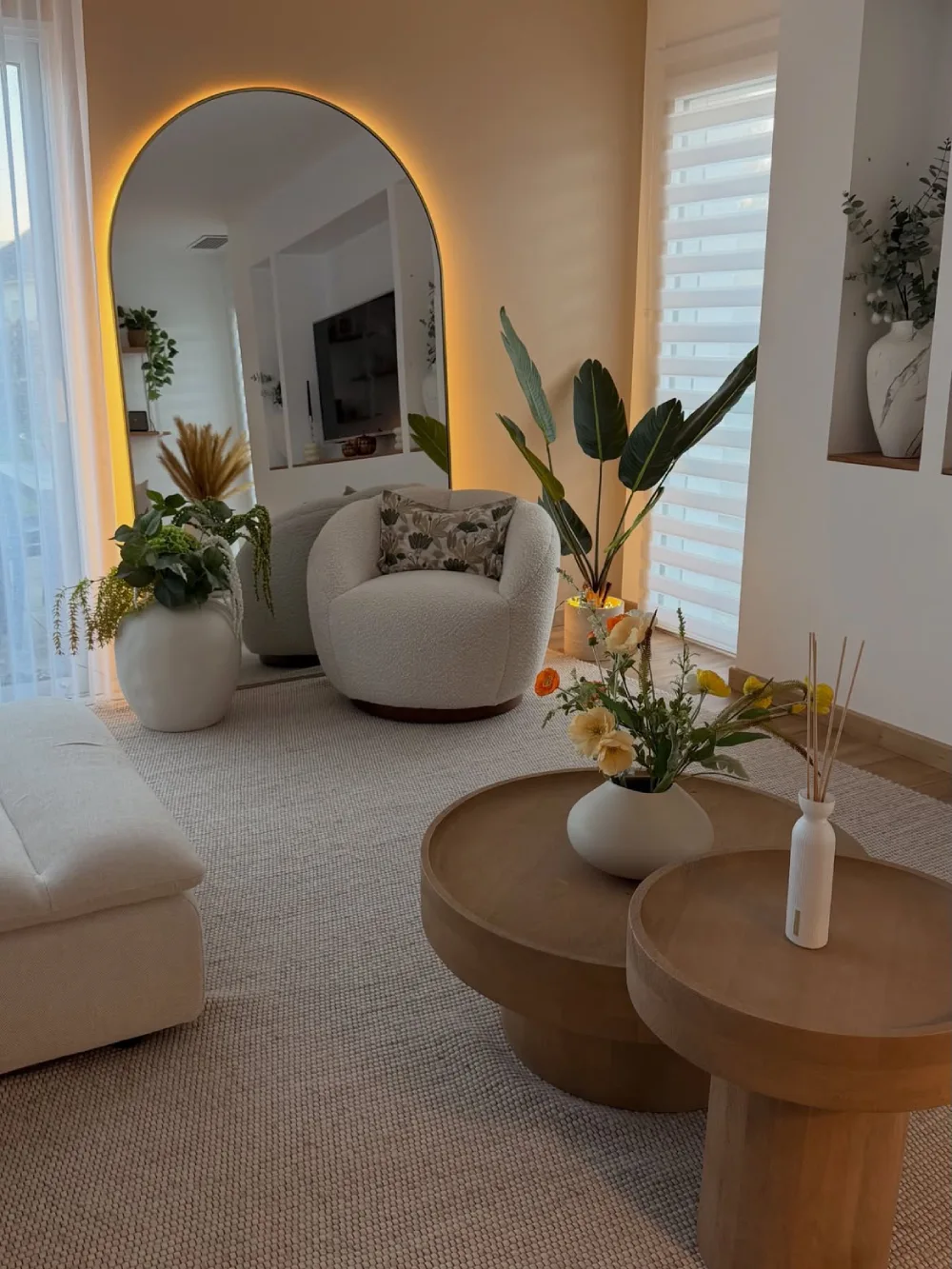
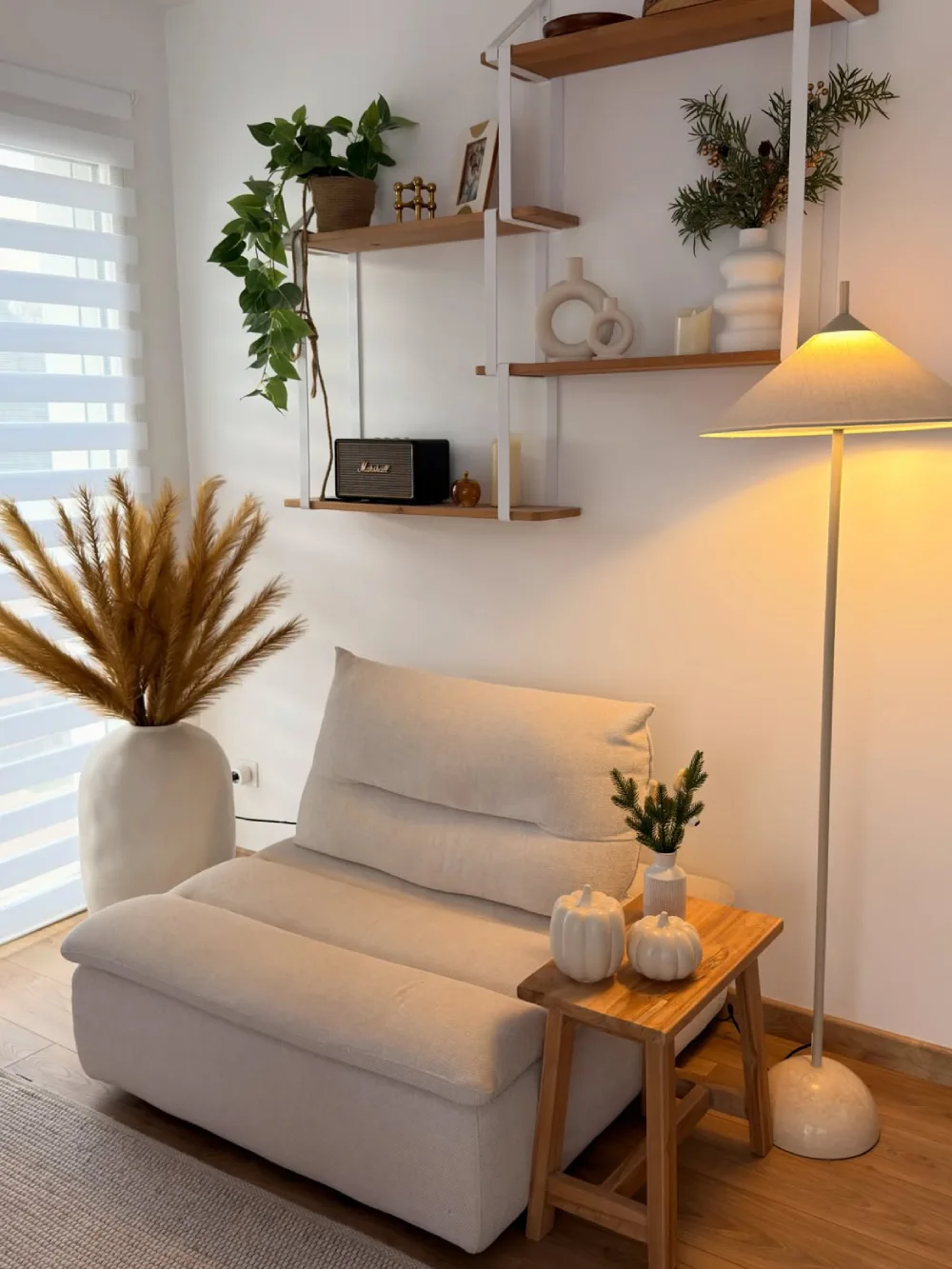
Small rooms do not have to be minimalist to feel spacious. These spaces balance comfortable seating, plants, warm wood, and carefully chosen accessories while keeping the overall palette calm and cohesive.
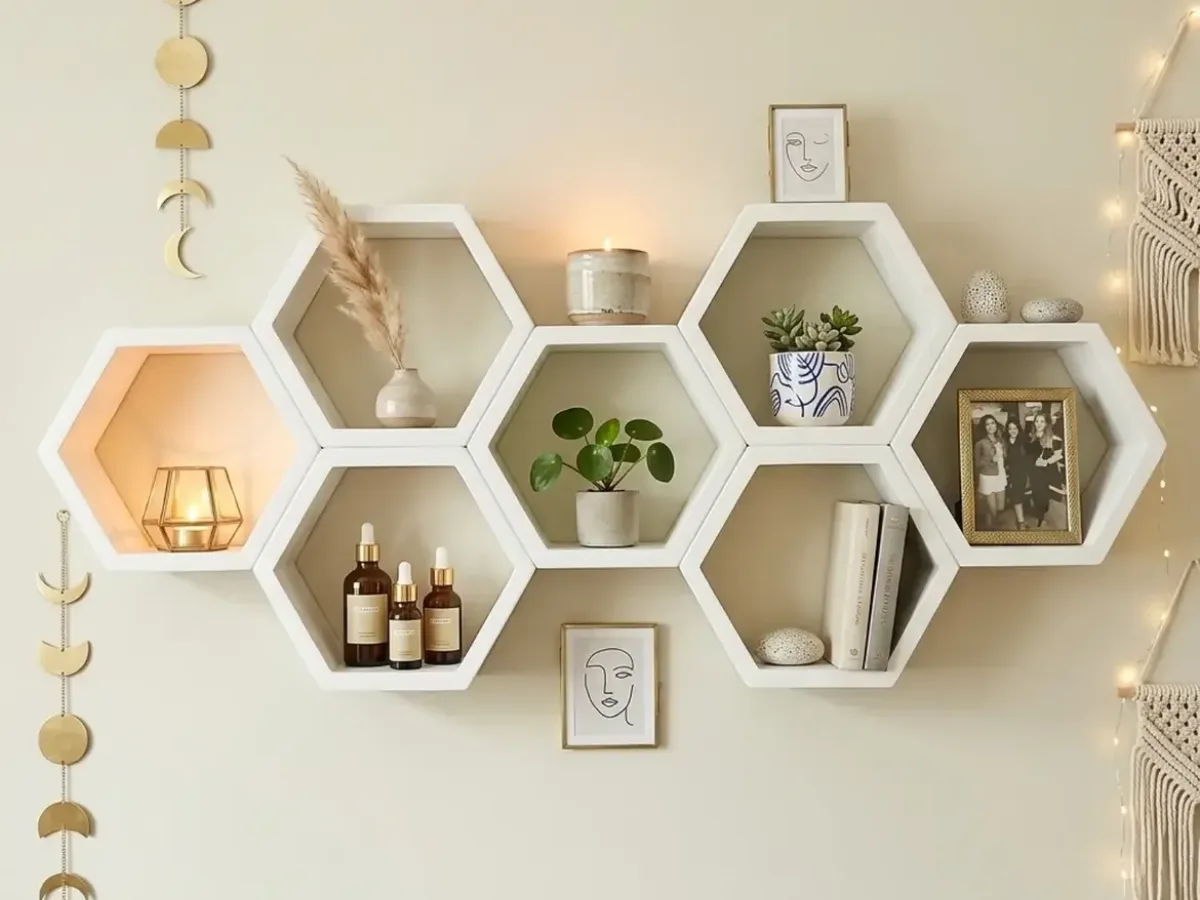
Use Shelves for Vertical Storage
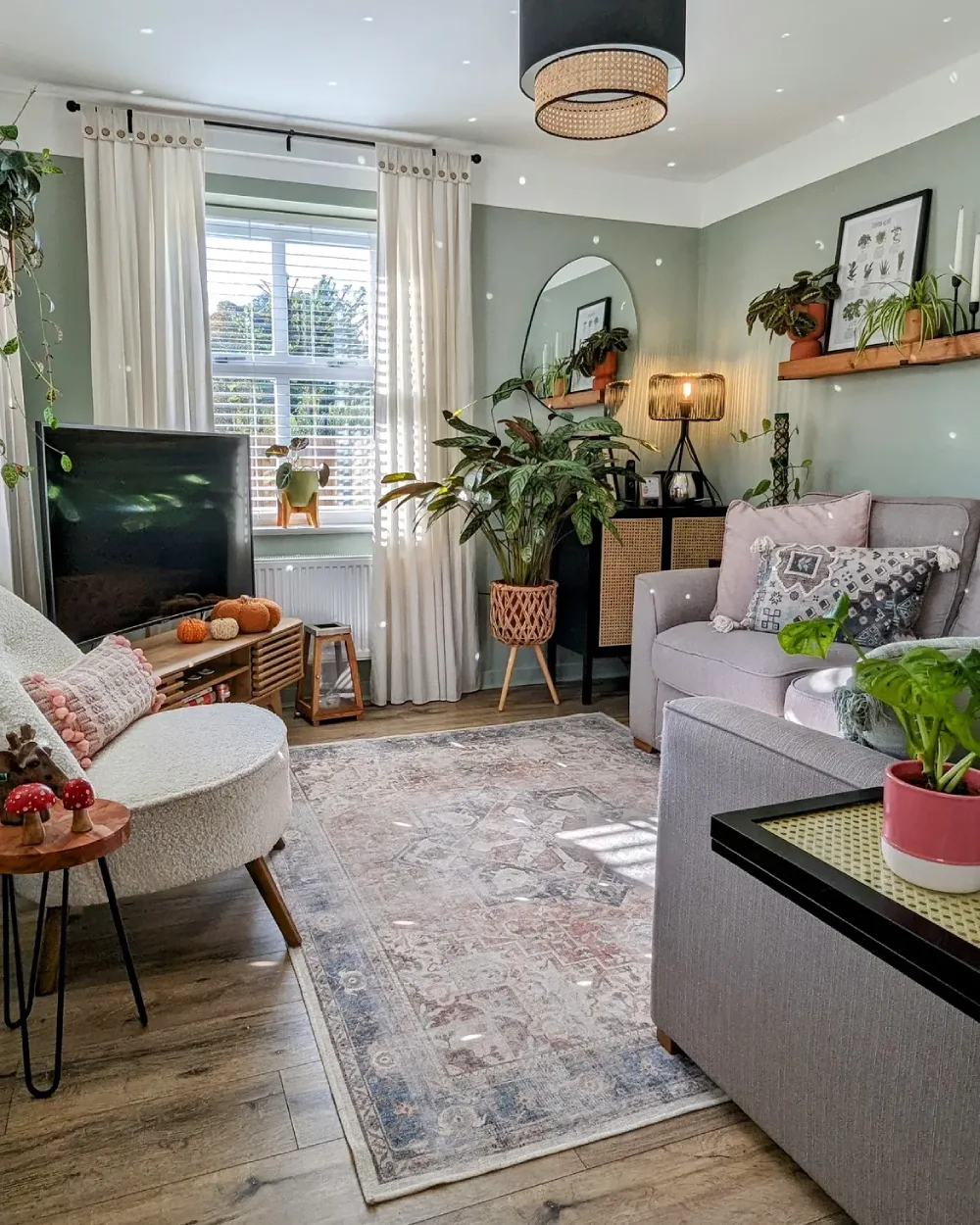
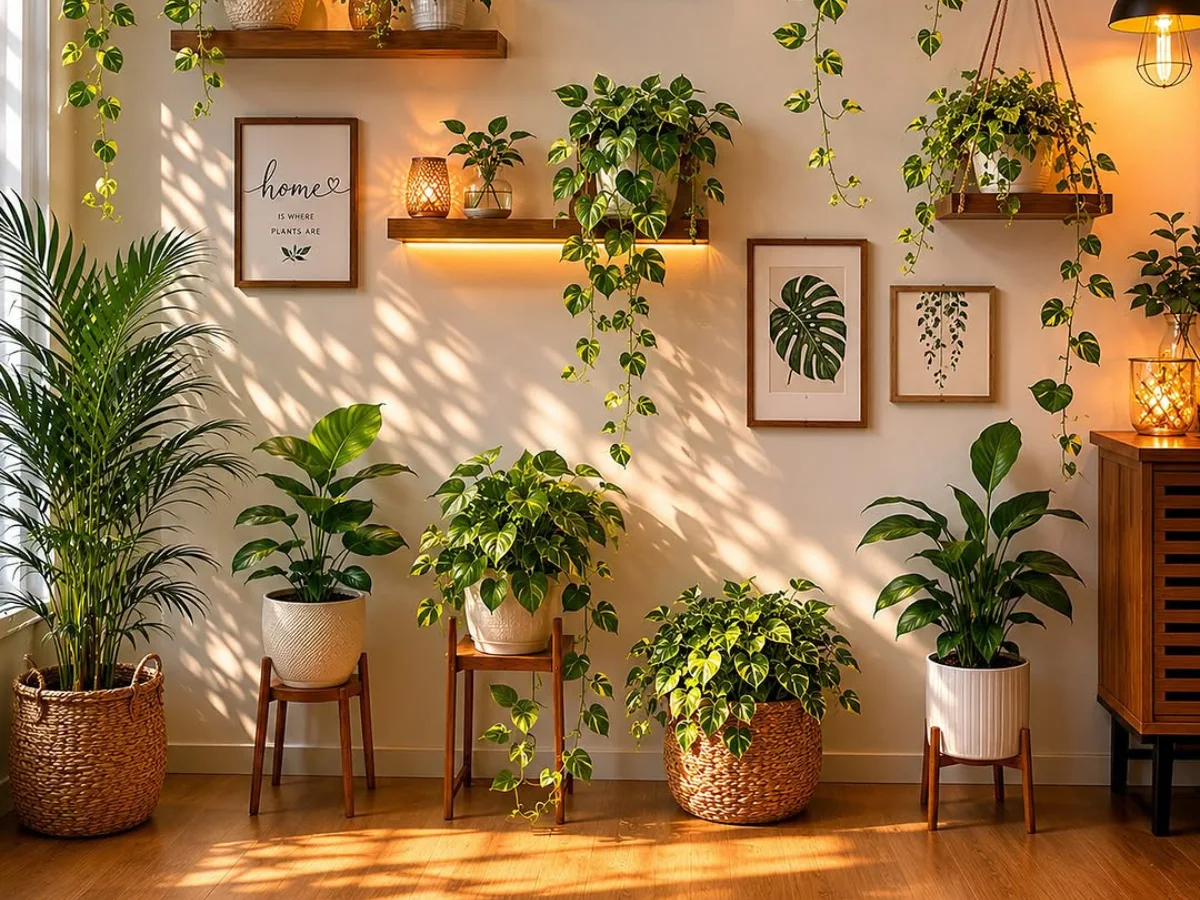
Open shelving makes use of vertical wall space without adding another bulky cabinet to the floor. A mix of plants, pottery, and everyday pieces keeps the storage practical while adding warmth.
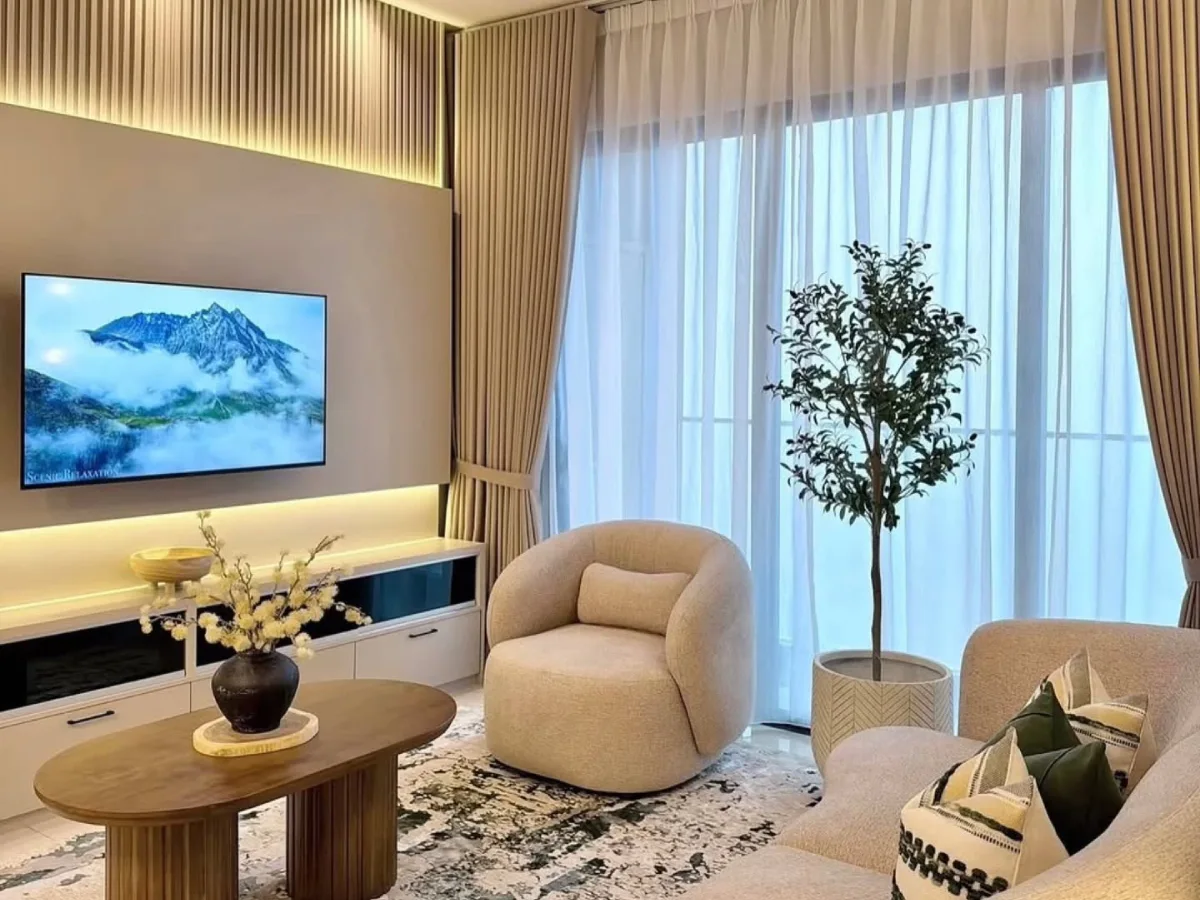
Make Natural Light a Focal Point
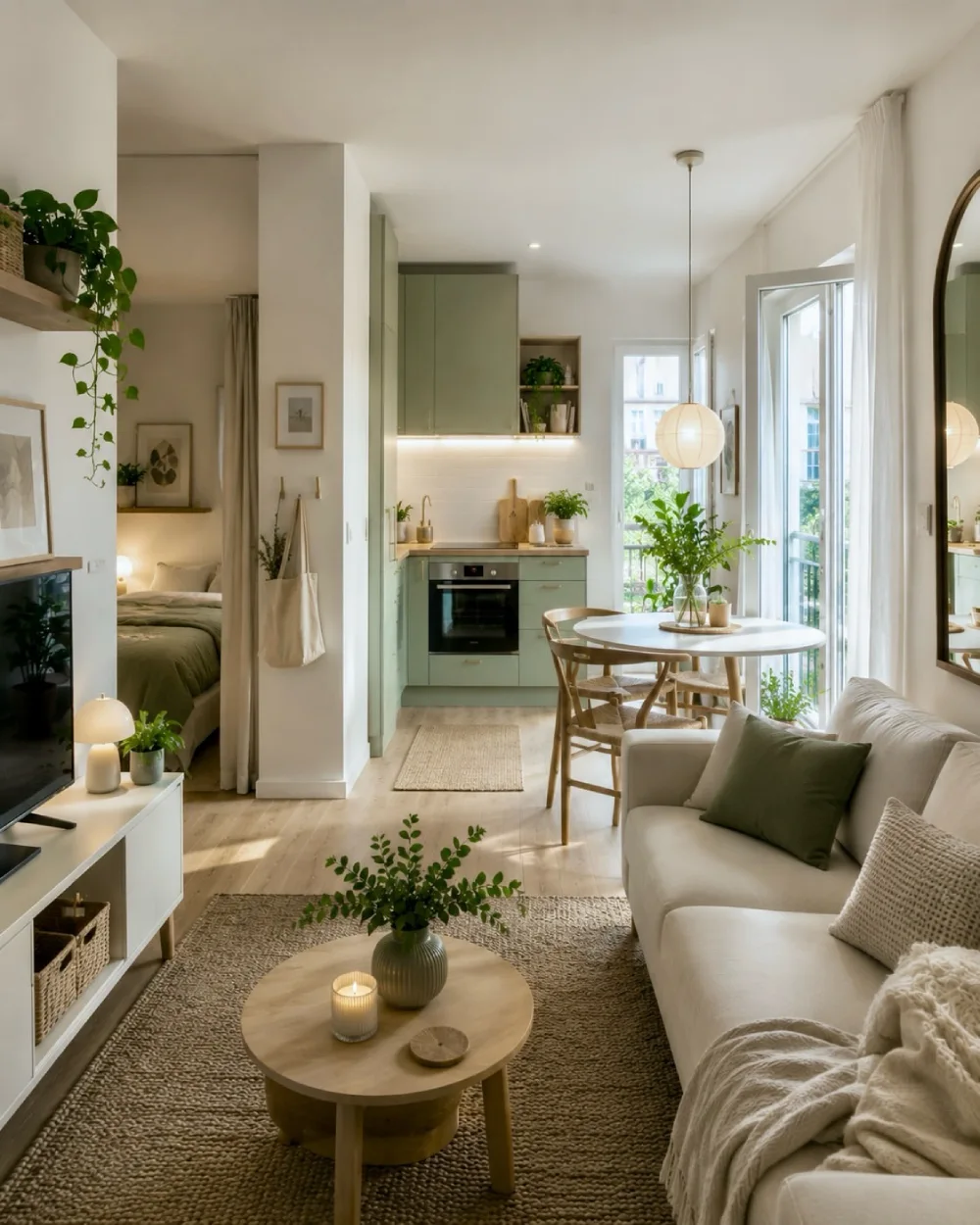
Large windows bring plenty of daylight into this compact living room, making the space feel brighter and more inviting. Light curtains allow sunshine through while maintaining a soft, comfortable atmosphere.
Connect the Living Room to Other Spaces
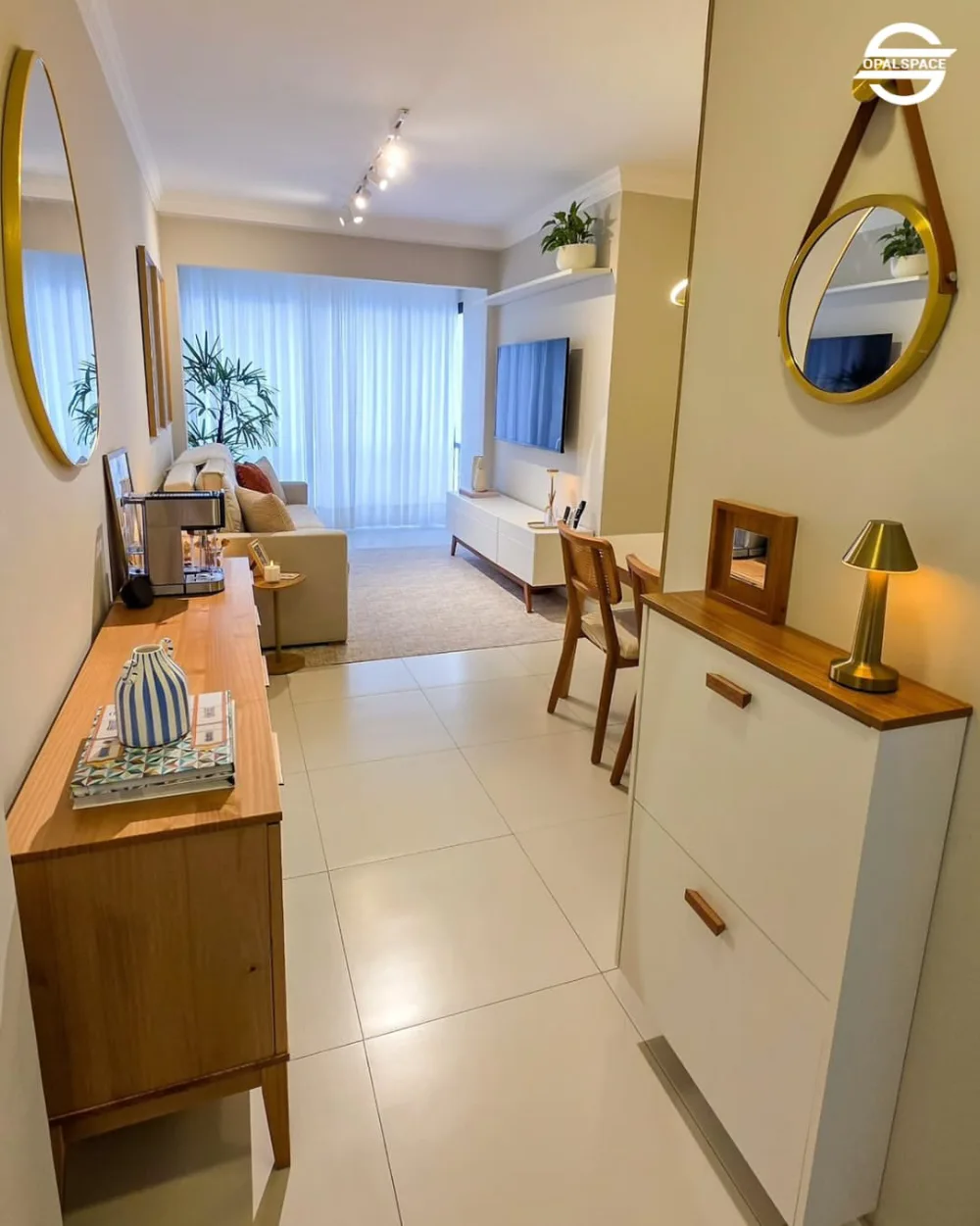
In an open-plan home, keeping the living room visually connected to nearby spaces can make the entire area feel larger. Similar neutral tones and natural materials create an easy flow from room to room.
Create a Cozy Seating Arrangement
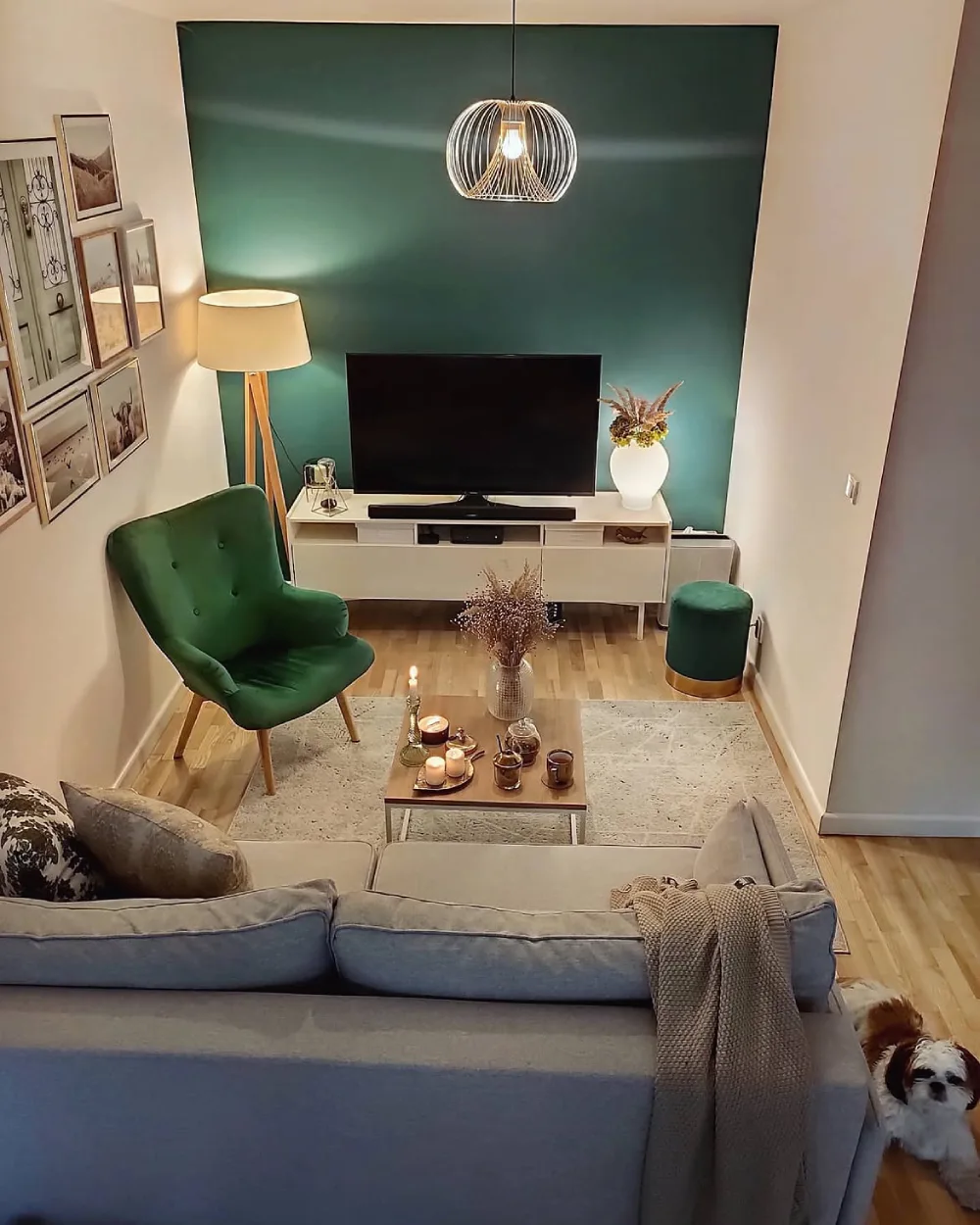
A small living room can still have several comfortable seats when the arrangement is planned carefully. This layout combines a sofa, accent chair, and compact ottoman while keeping the main walkway clear.
Make the Most of Corner Space
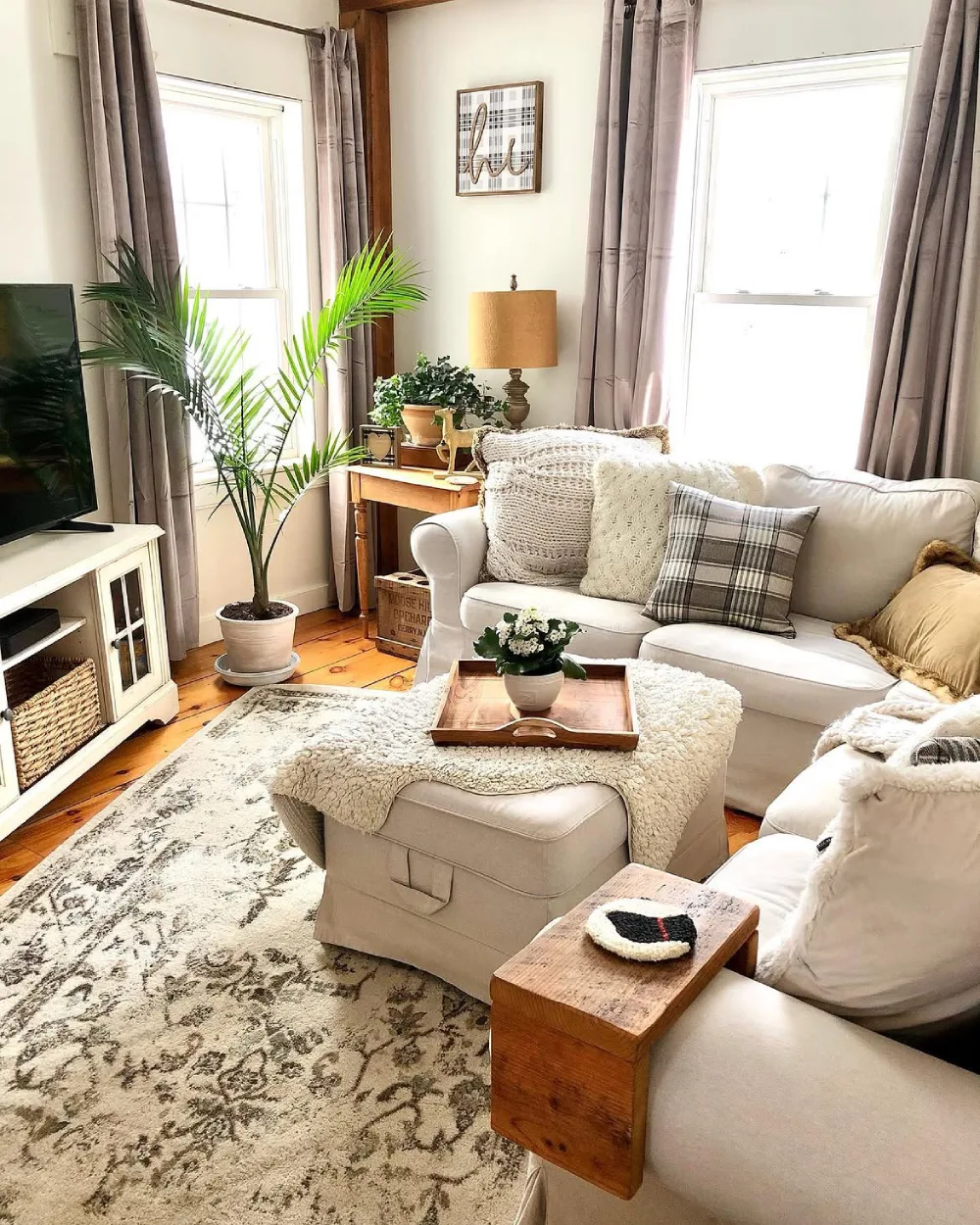
A corner can become one of the most useful spots in a small living room. Here, the seating wraps naturally around the space, while the ottoman doubles as a comfortable footrest and practical surface.
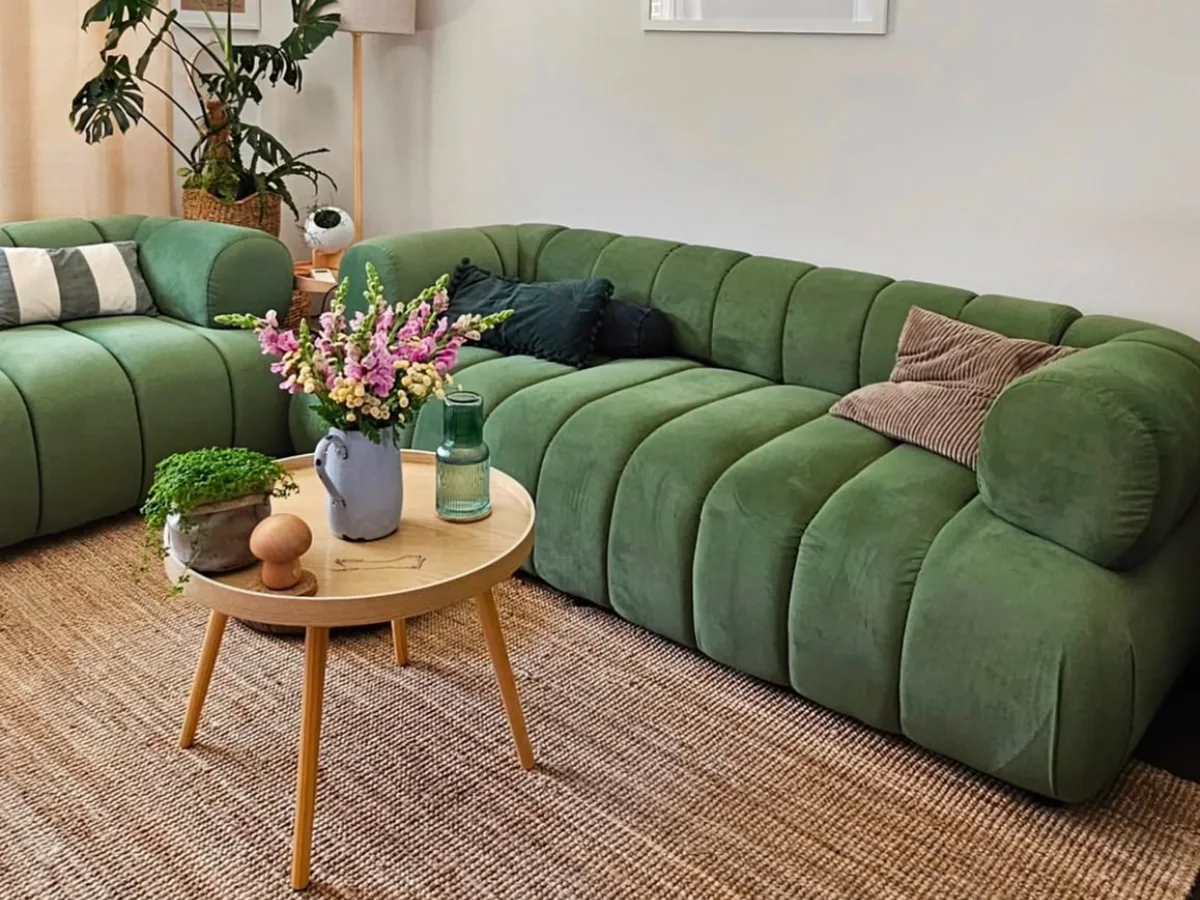
Add Personality With Bold Color
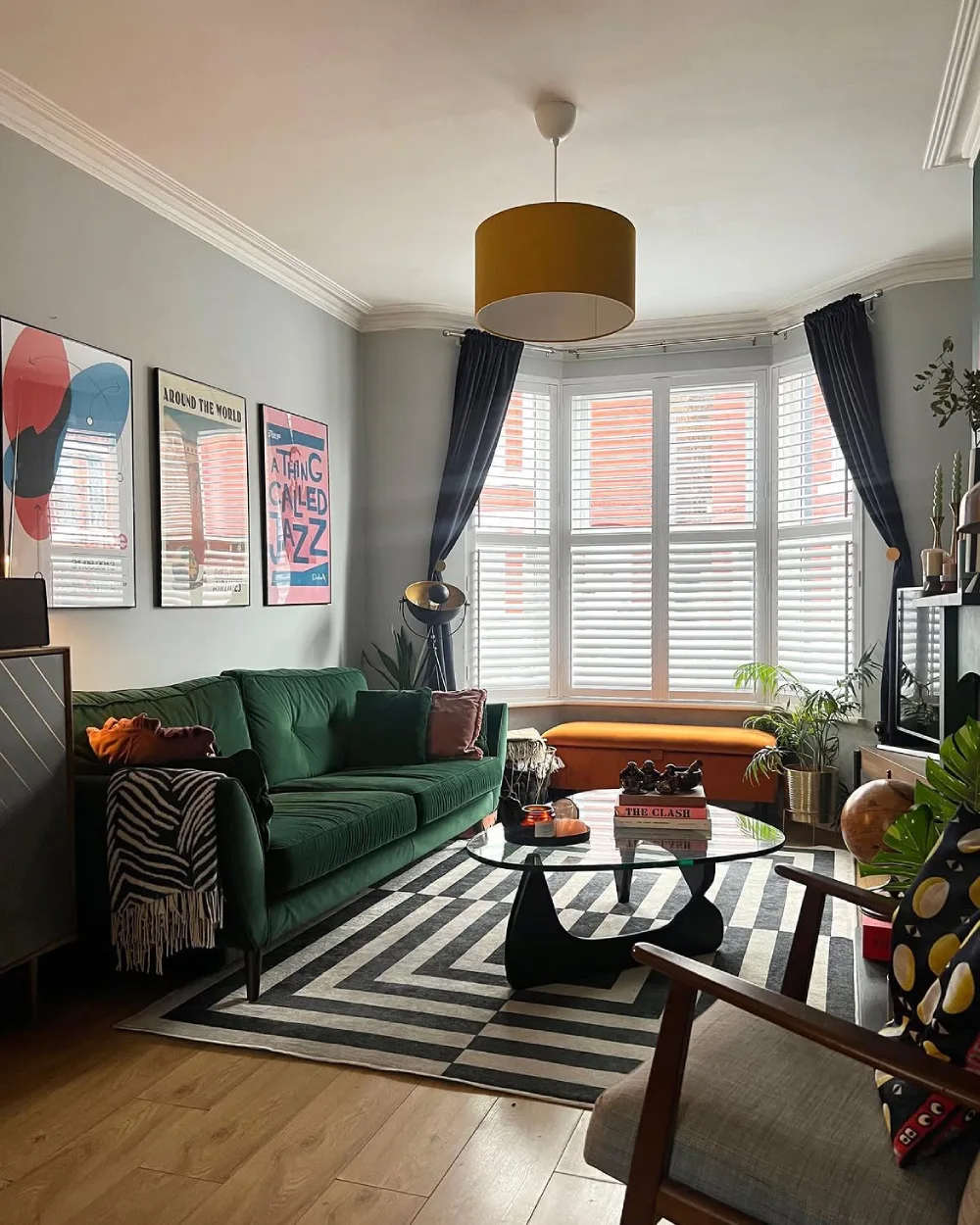
A small room can handle plenty of personality when the colors are thoughtfully balanced. The deep green sofa and graphic rug give this compact space a bold look without overwhelming its simple layout.
Use a Compact Coffee Table
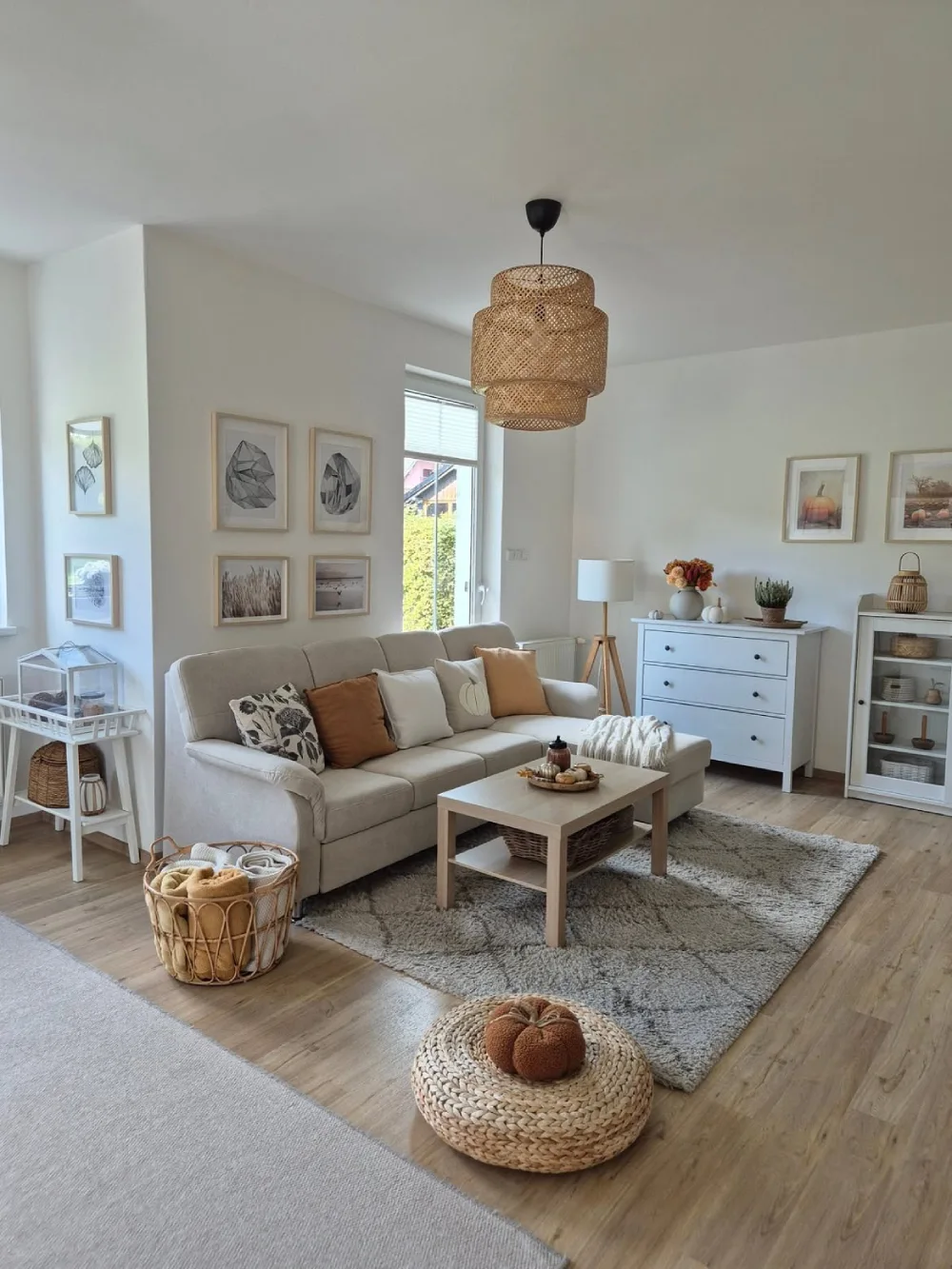
A compact coffee table can provide plenty of function without taking over the room. This simple rectangular design leaves enough space around the seating while adding a useful lower shelf for extra storage.
Bring in a Flexible Seating Piece
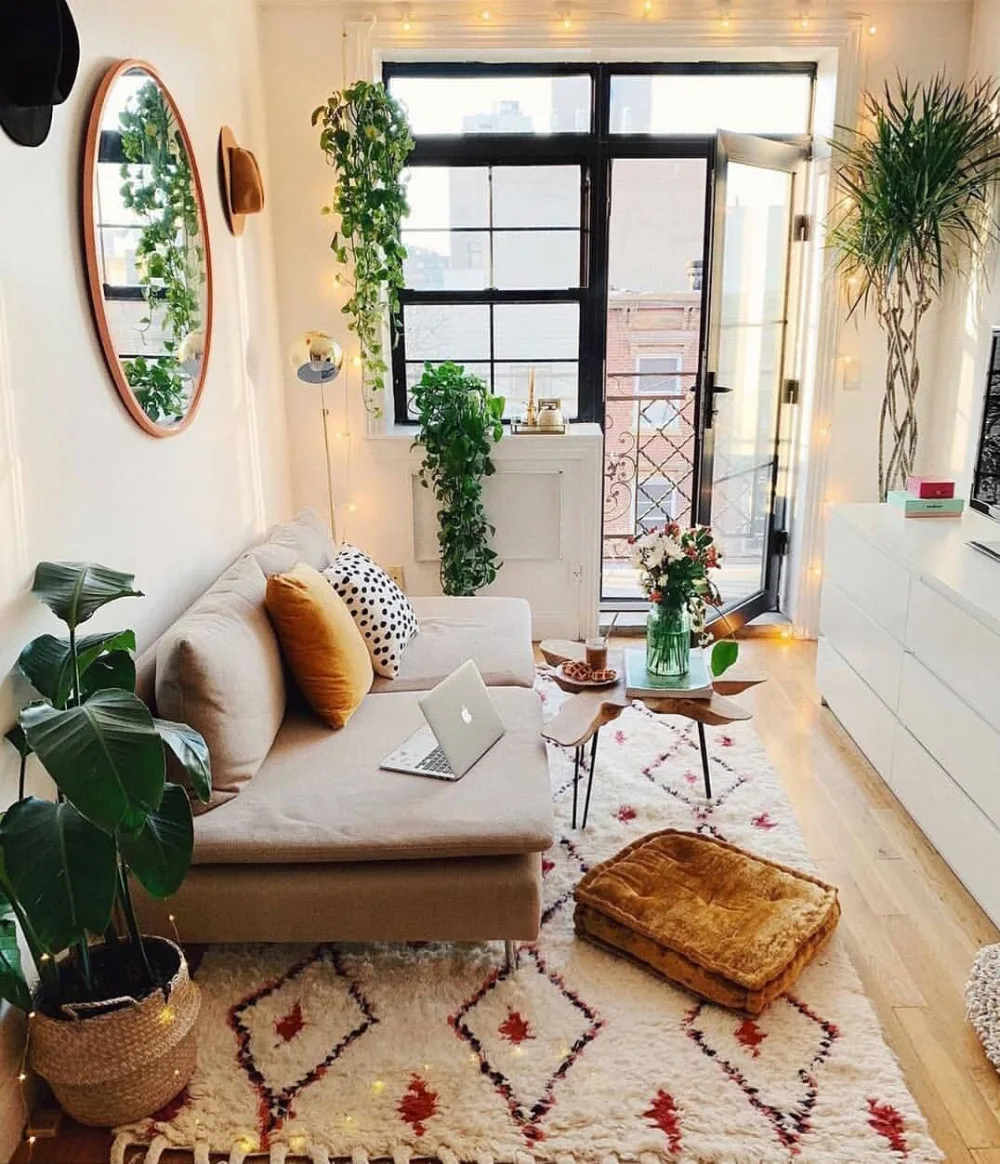
An ottoman is especially useful in a small living room because it can serve several purposes. Use it as a footrest, extra seating, or a temporary table while keeping the main furniture arrangement streamlined.
Create a Warm Neutral Retreat
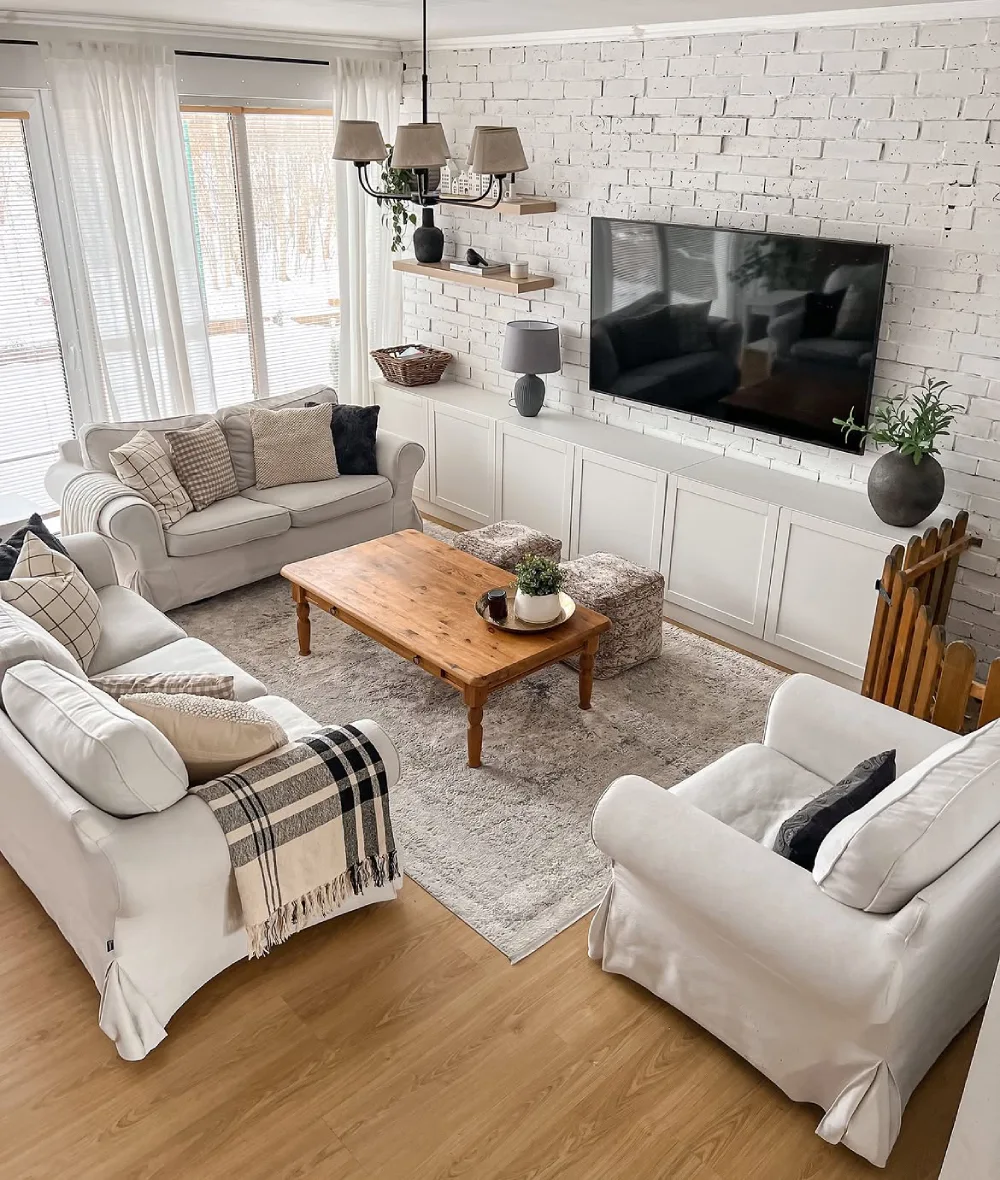
Warm neutrals can make a compact living room feel calm rather than cramped. Natural wood, soft upholstery, and understated artwork create layers of texture while keeping the overall look light and cohesive.
Take Advantage of Natural Light
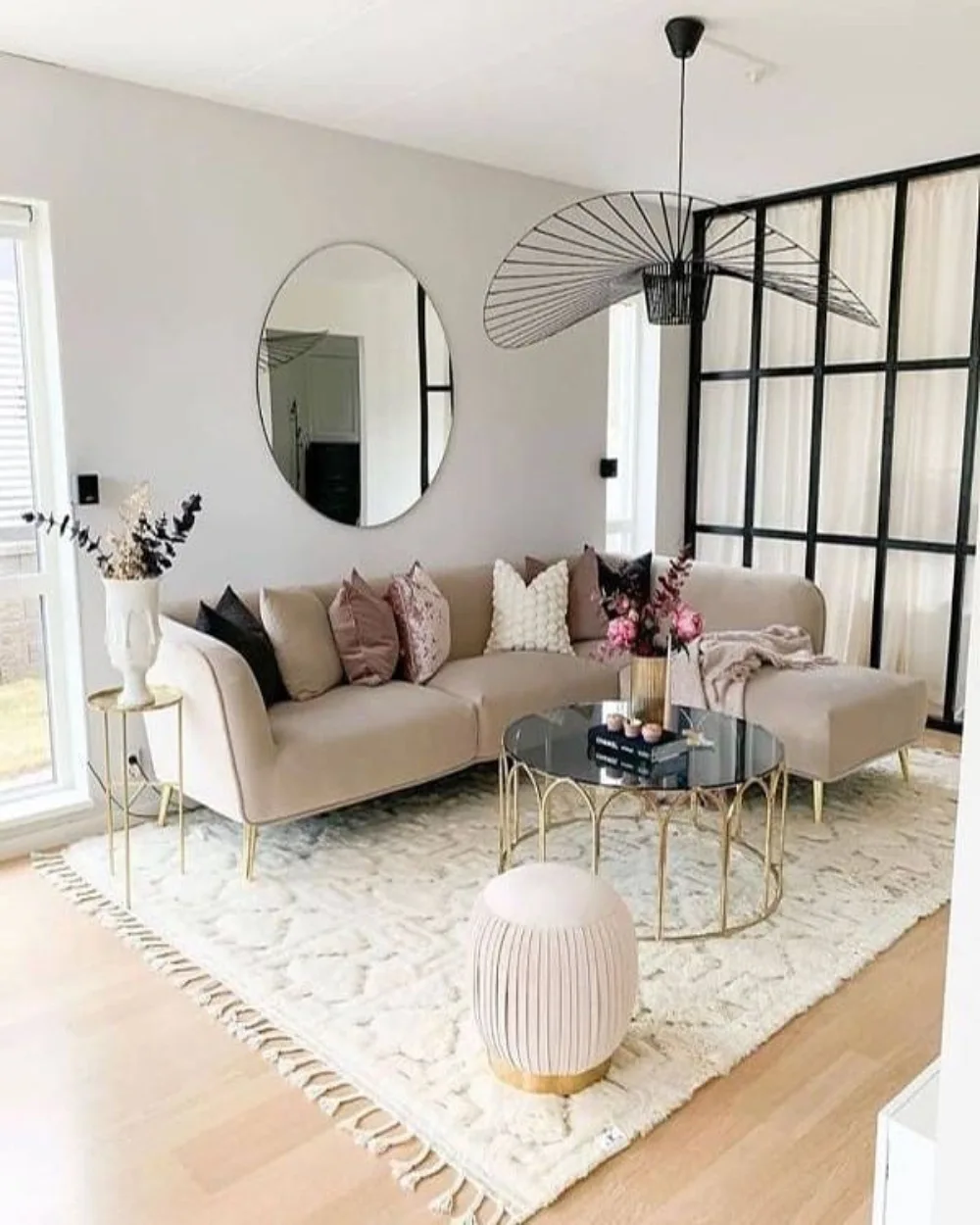
Large windows can make a small living room feel much more open. Sheer curtains keep the space bright during the day, while a restrained palette helps the natural light travel throughout the room.
Turn a Wall Into a Feature
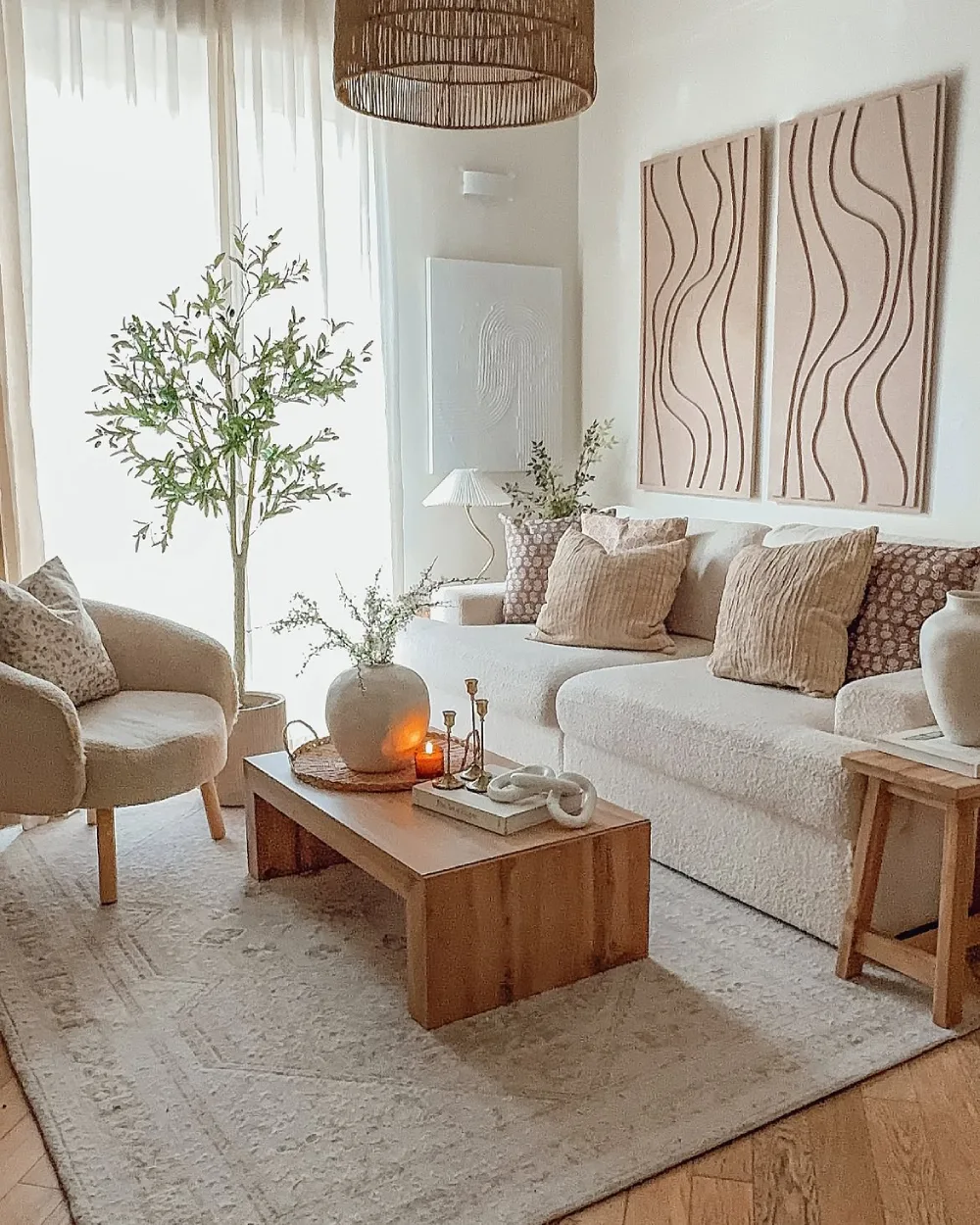
A feature wall can add character without using any floor space. The white brick finish gives this compact living room texture, while floating shelves provide display space above the low storage unit.
Define the Seating Zone With a Rug
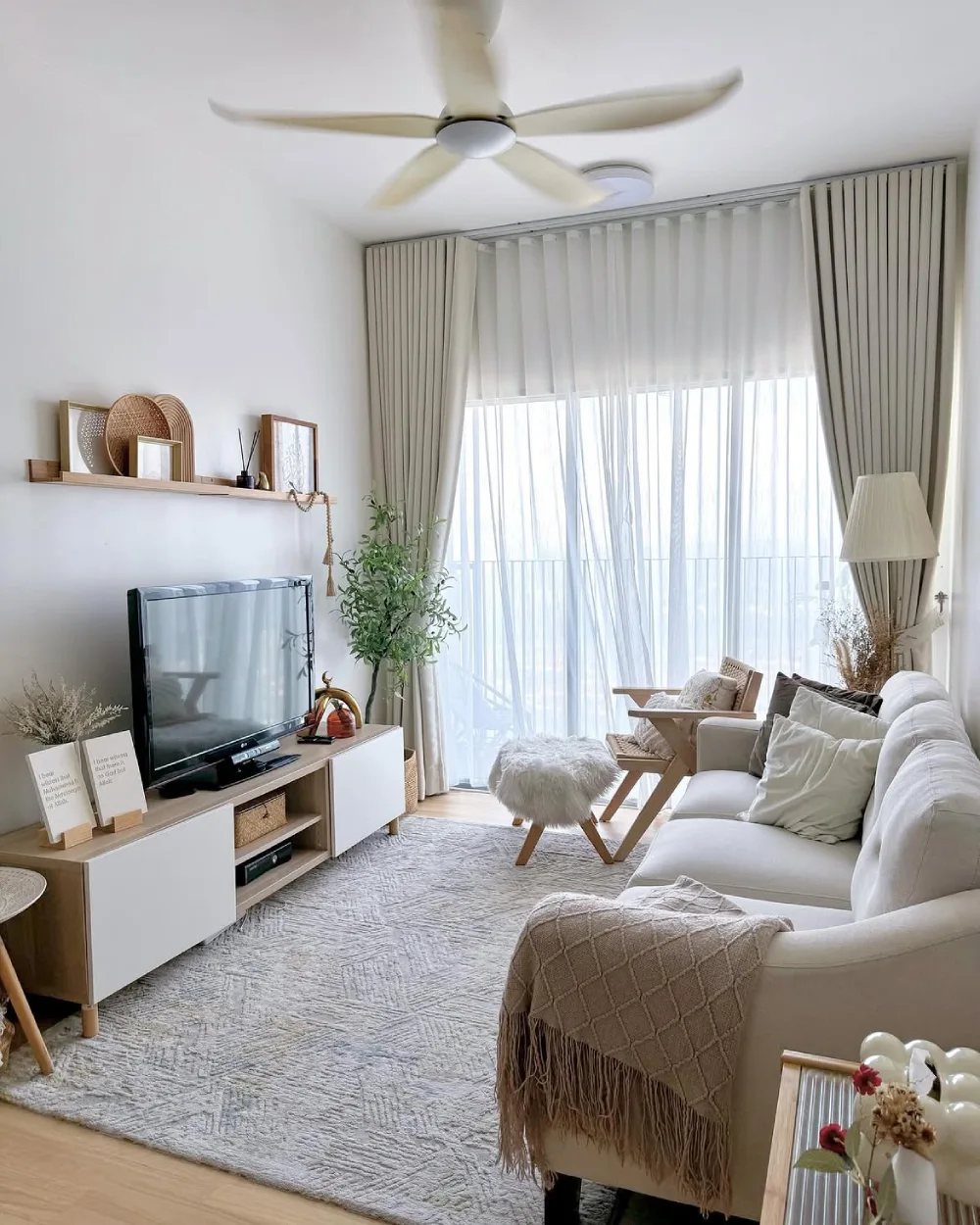
A well-sized rug helps visually anchor furniture in a small living room. This neutral design connects the sectional and coffee table, creating a defined seating zone without adding physical barriers.
Choose a Sectional for Extra Seating
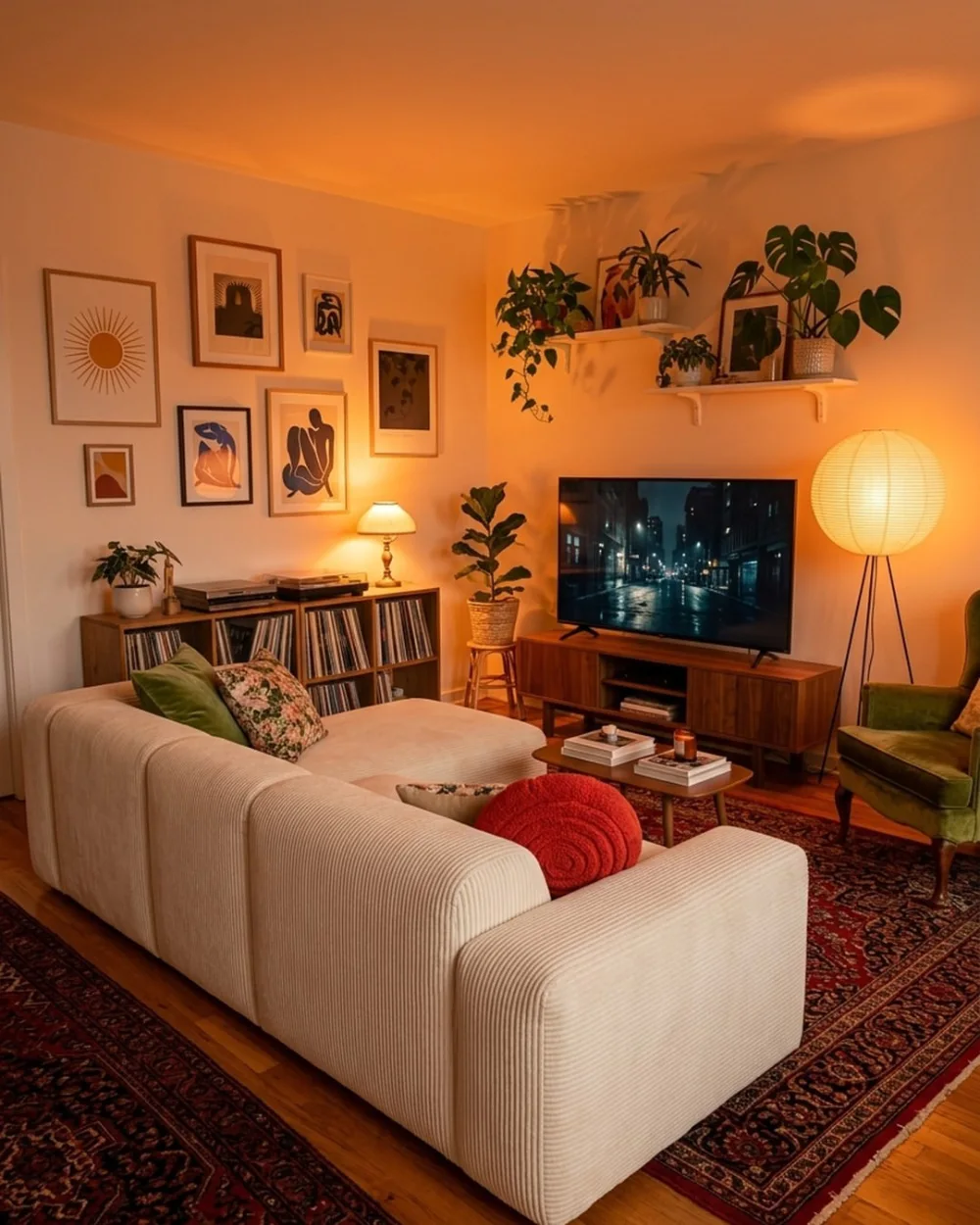
A compact sectional can seat more people than separate chairs while using the room's corners efficiently. Pairing it with small round tables keeps the arrangement comfortable and easy to navigate.
Keep Furniture Close to the Walls
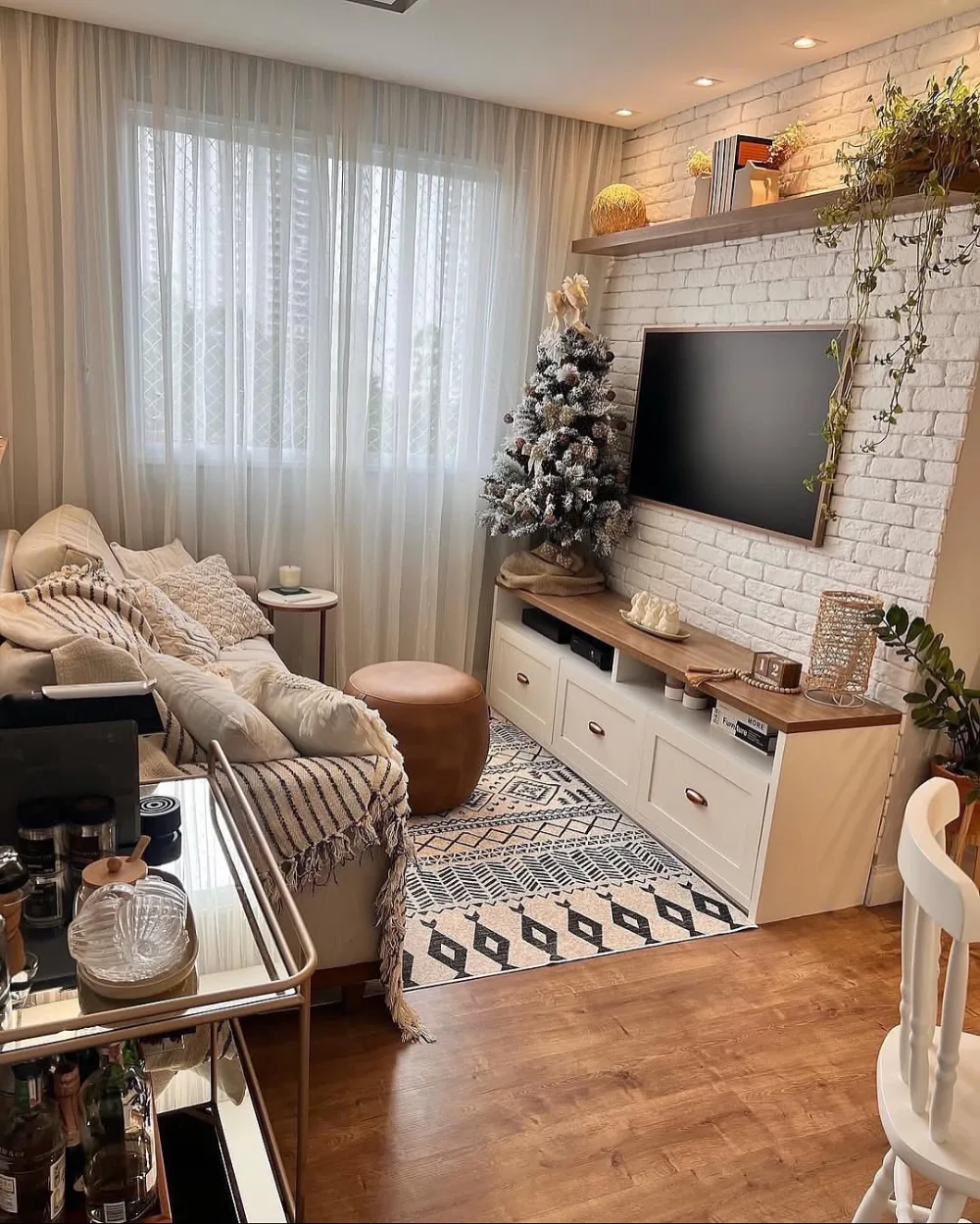
Placing larger furniture along the walls can preserve valuable circulation space in a compact room. The open floor in front of this sectional makes the adjoining dining area feel connected rather than crowded.
Layer Texture for a Cozy Finish
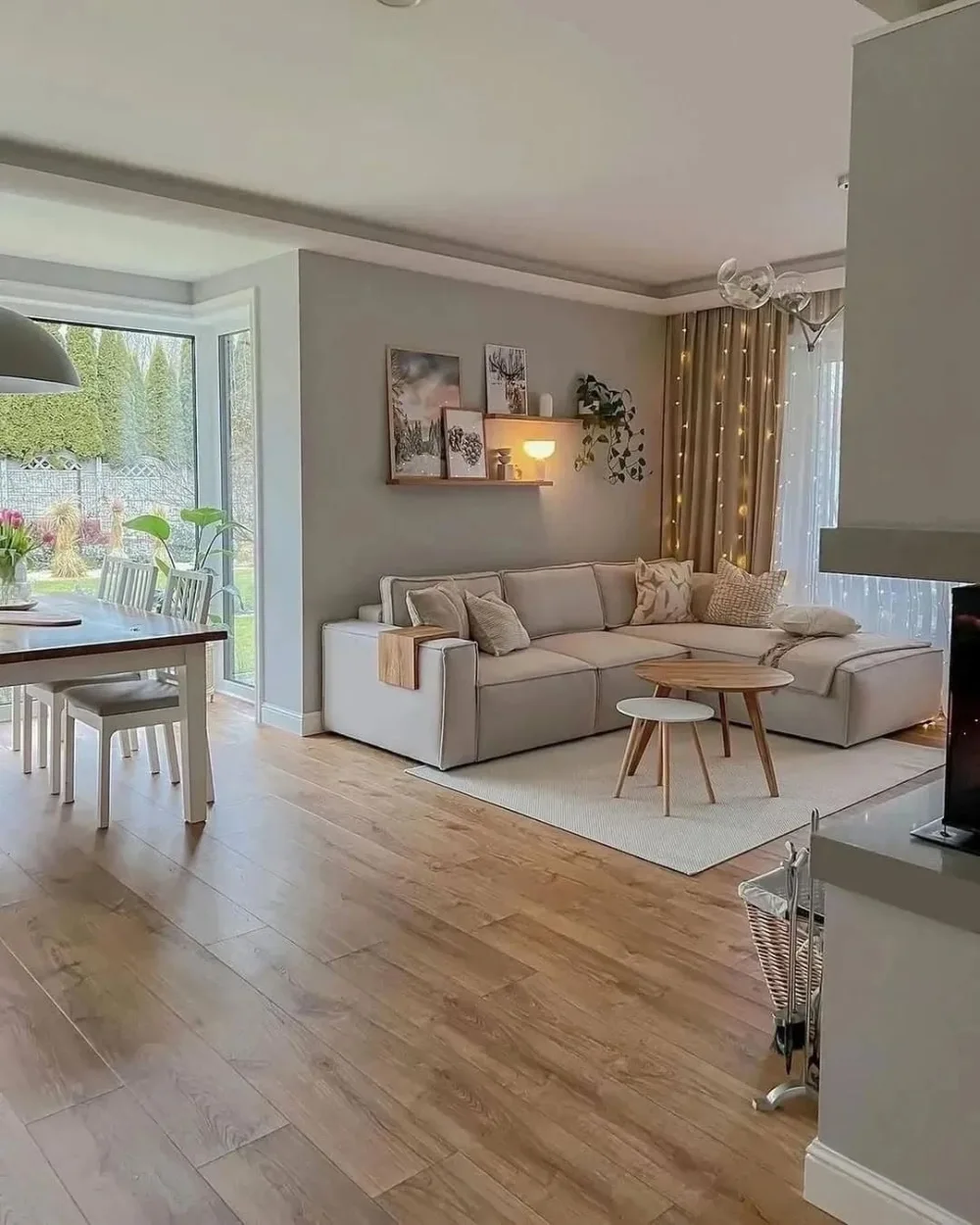
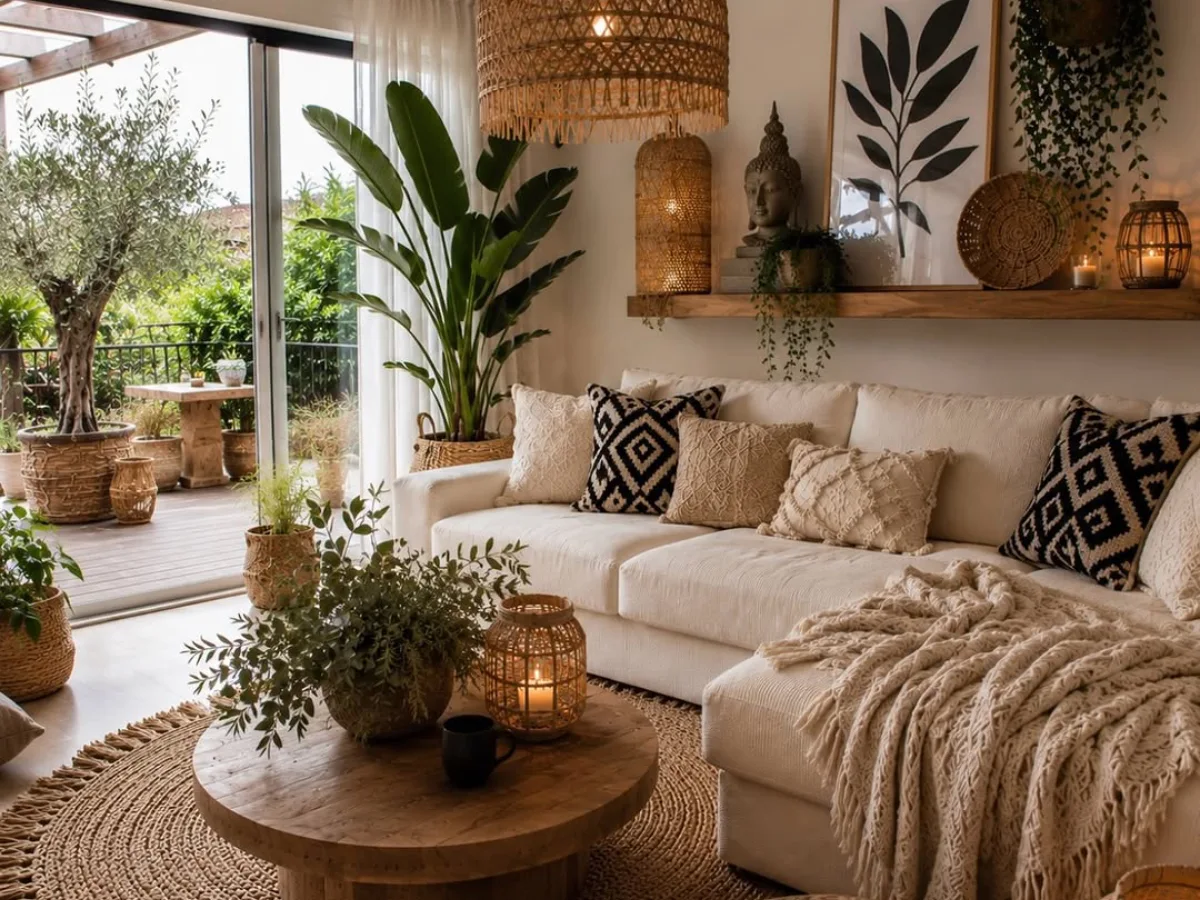
Texture can make a small living room feel inviting without adding more furniture. Woven materials, soft upholstery, natural wood, and greenery give this space plenty of warmth while keeping the palette beautifully restrained.