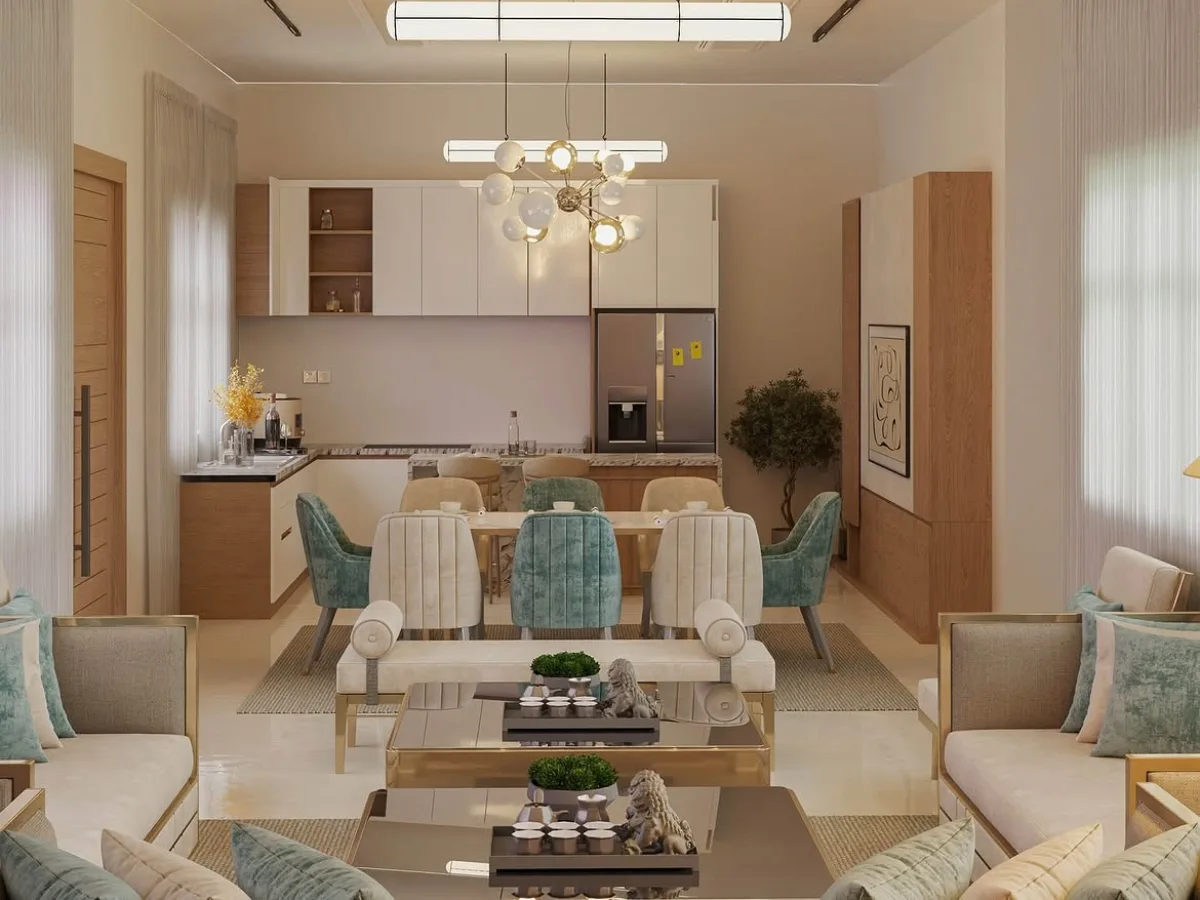
An open-concept dining room can make the kitchen and dining area feel like one naturally connected space. The key is creating visual flow while giving each area enough definition to feel intentional. These ideas show how to balance layout, furniture, lighting, and finishes for a seamless connection.
Define the Dining Zone
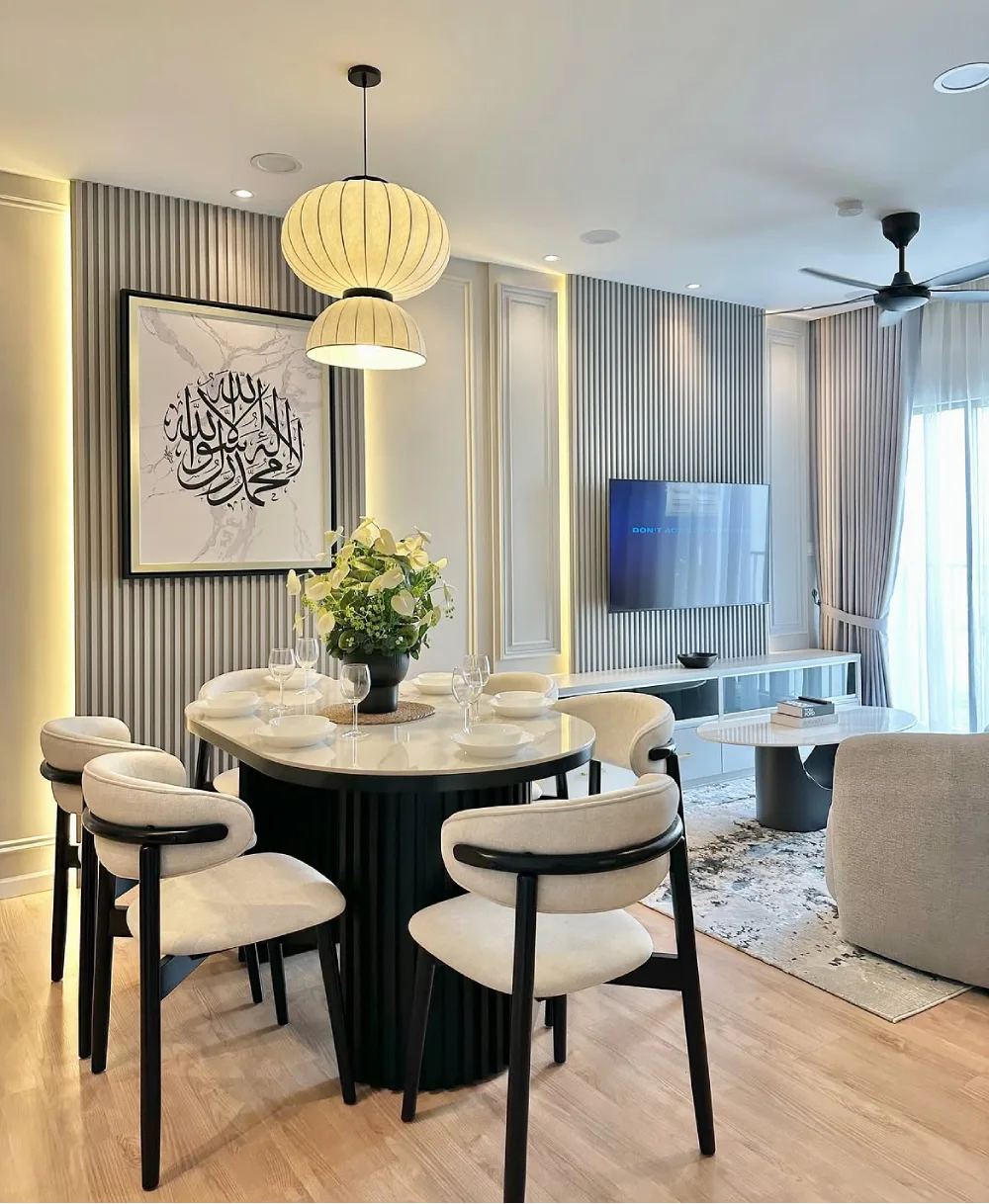
A round dining table helps define the eating area without closing it off from the living room. The black base and matching wall details also add contrast, giving this open layout a polished, connected feel.
Let Lighting Connect the Spaces
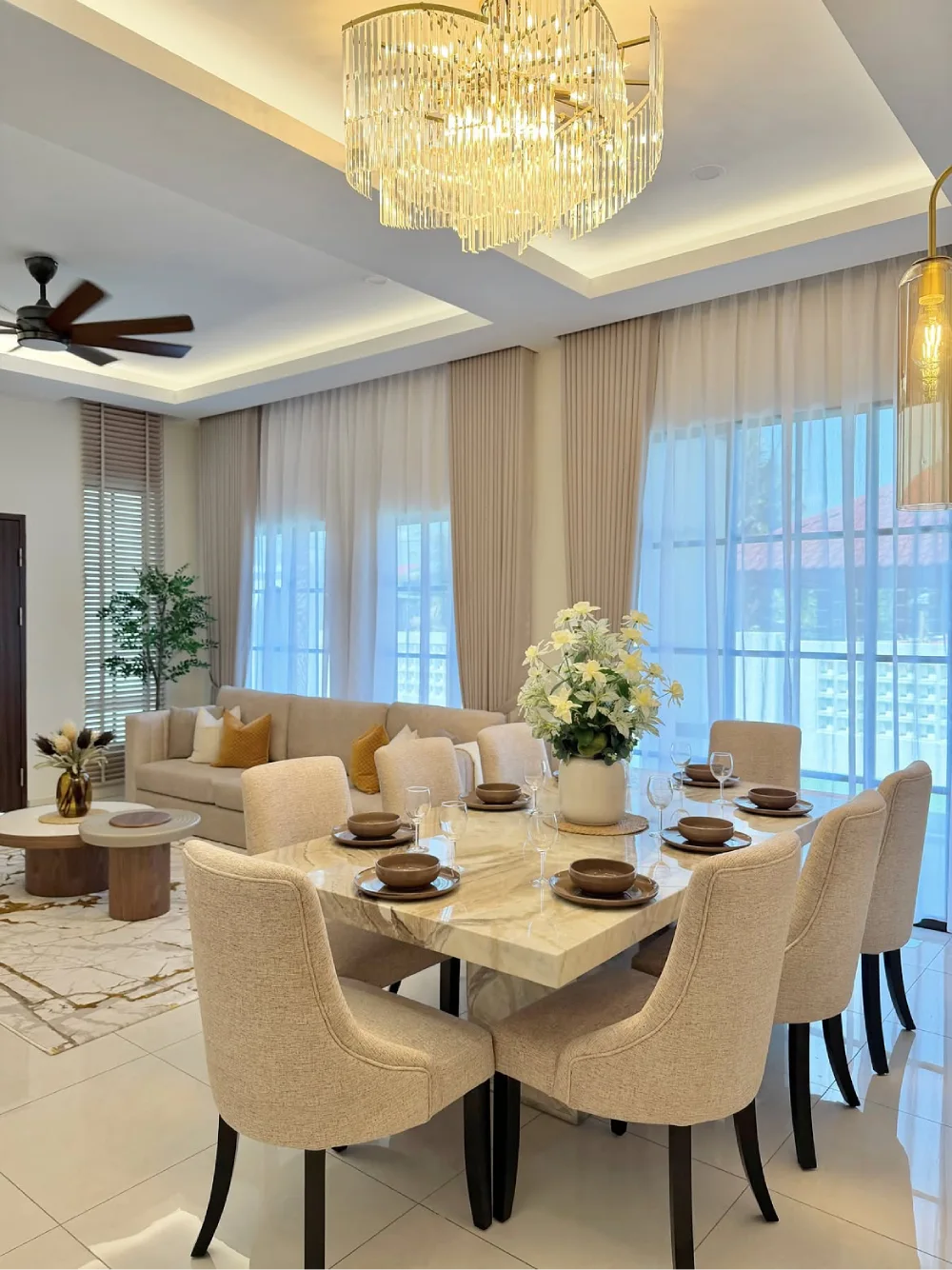
A statement chandelier can visually anchor the dining area while keeping the surrounding living space open. Here, soft upholstery, warm lighting, and a large marble table create a cohesive setting that feels bright and inviting.
Make a Small Dining Area Work
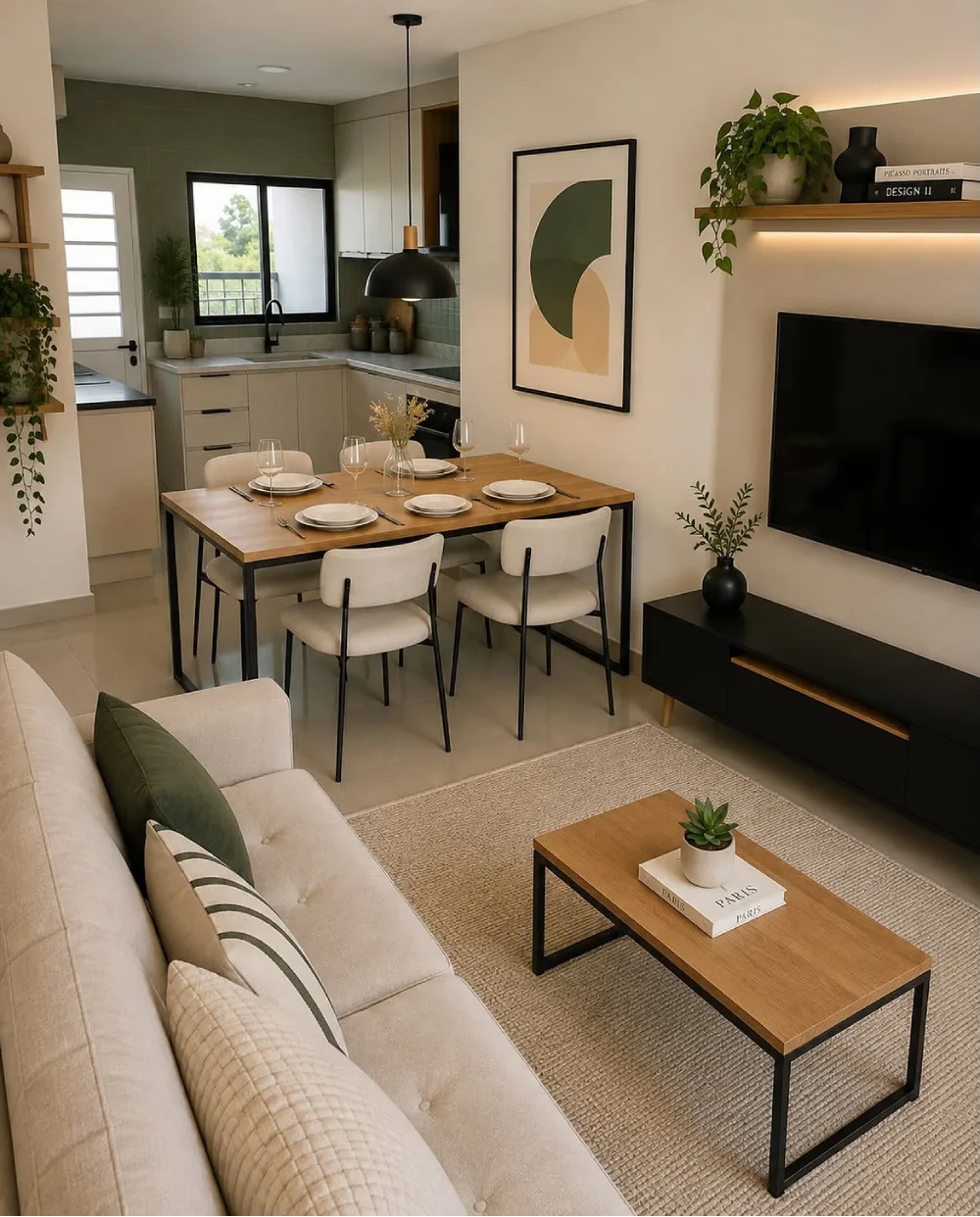
When space is limited, placing the dining table directly beside the kitchen makes everyday meals more convenient. A simple wood table and streamlined chairs keep the transition between cooking, dining, and relaxing visually open.
Use Wood to Tie Areas Together
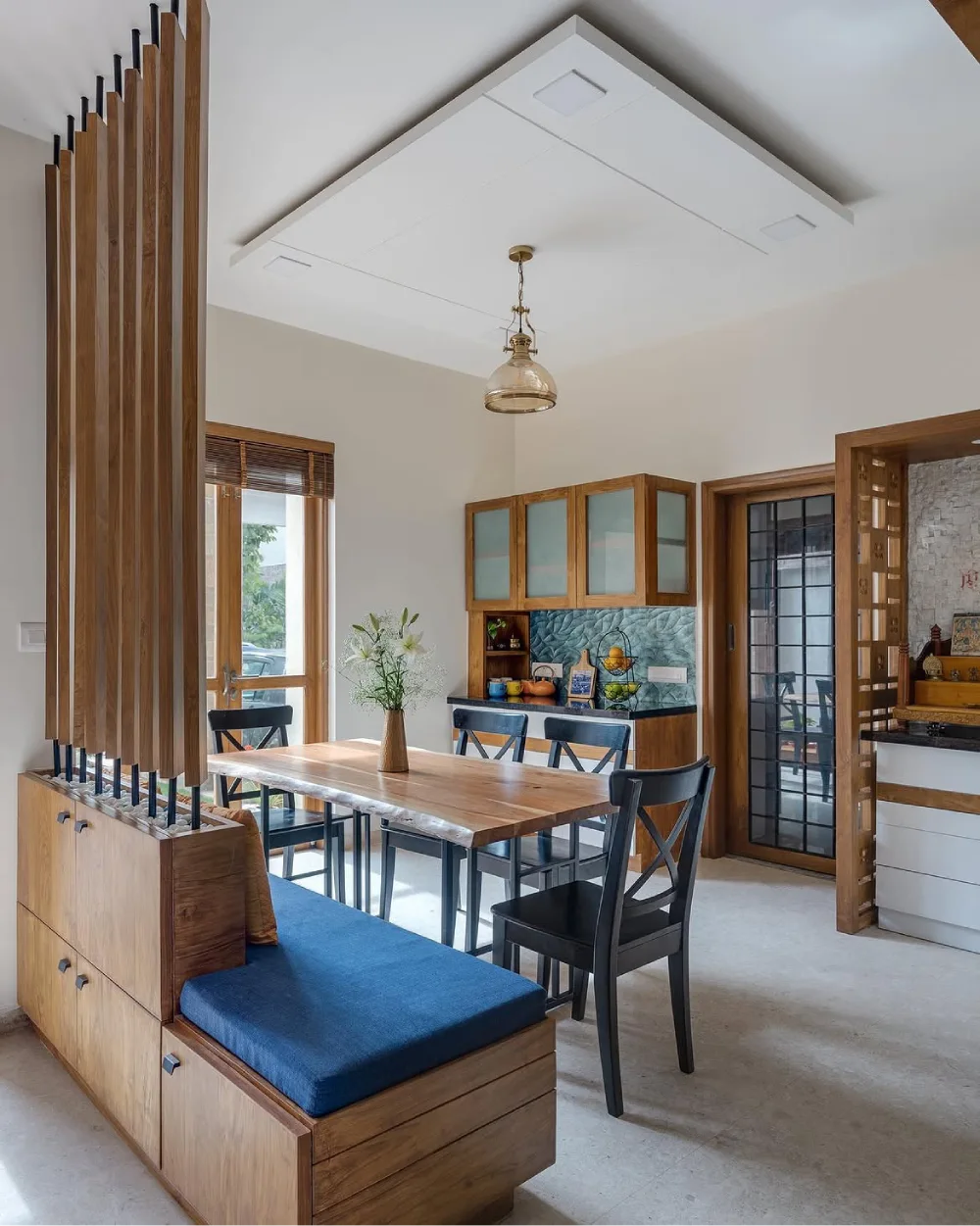
Natural wood is an easy way to bring warmth into an open-concept layout. The substantial dining table echoes the surrounding wood details, while generous windows keep the room connected to the garden beyond.
Create Flow With Matching Finishes
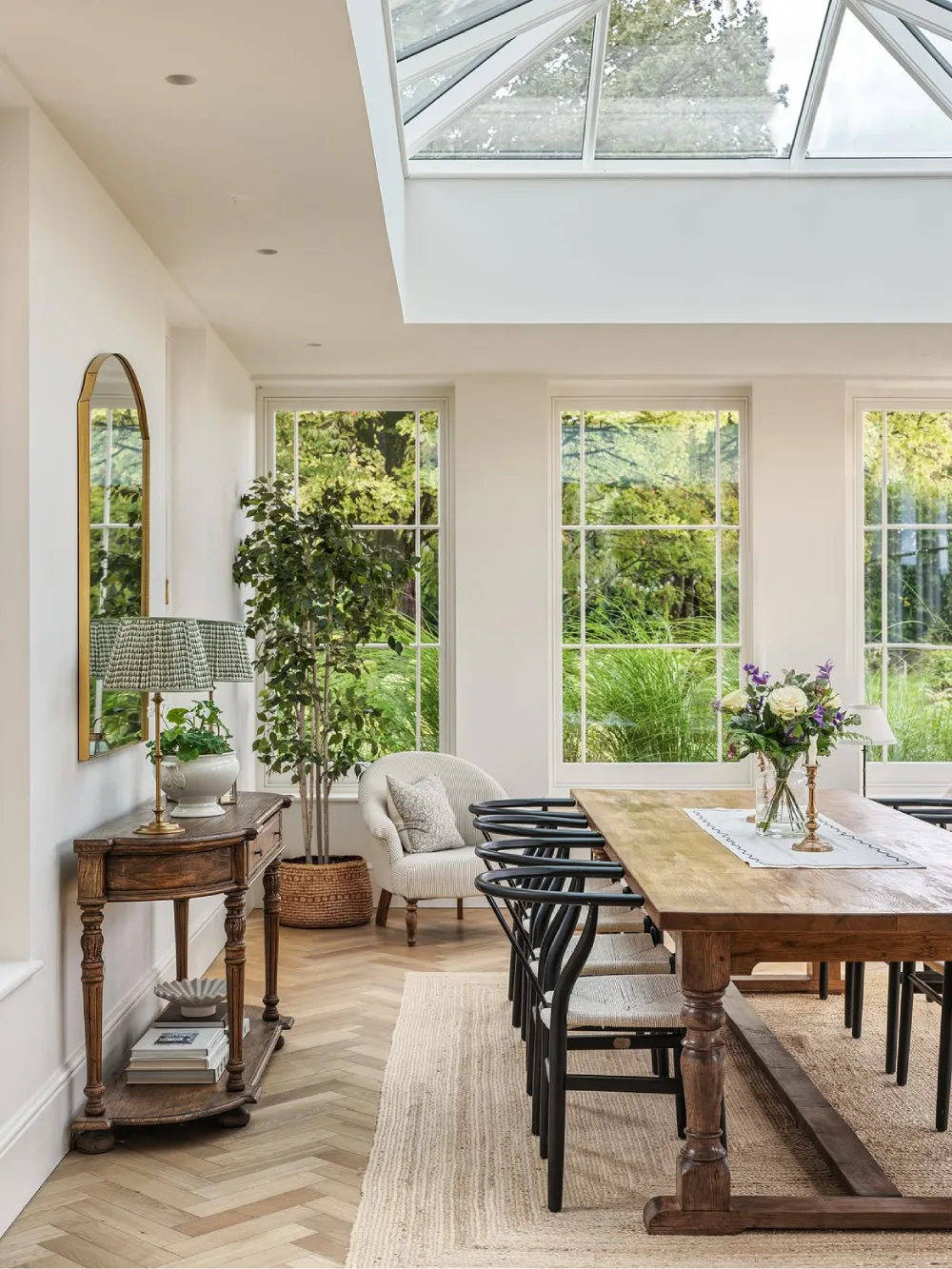
Repeating wood tones throughout the dining area and nearby cabinetry creates a natural visual bridge. The black chairs add definition without making the open space feel divided from the adjoining kitchen and living areas.
Warm Up a Shared Space
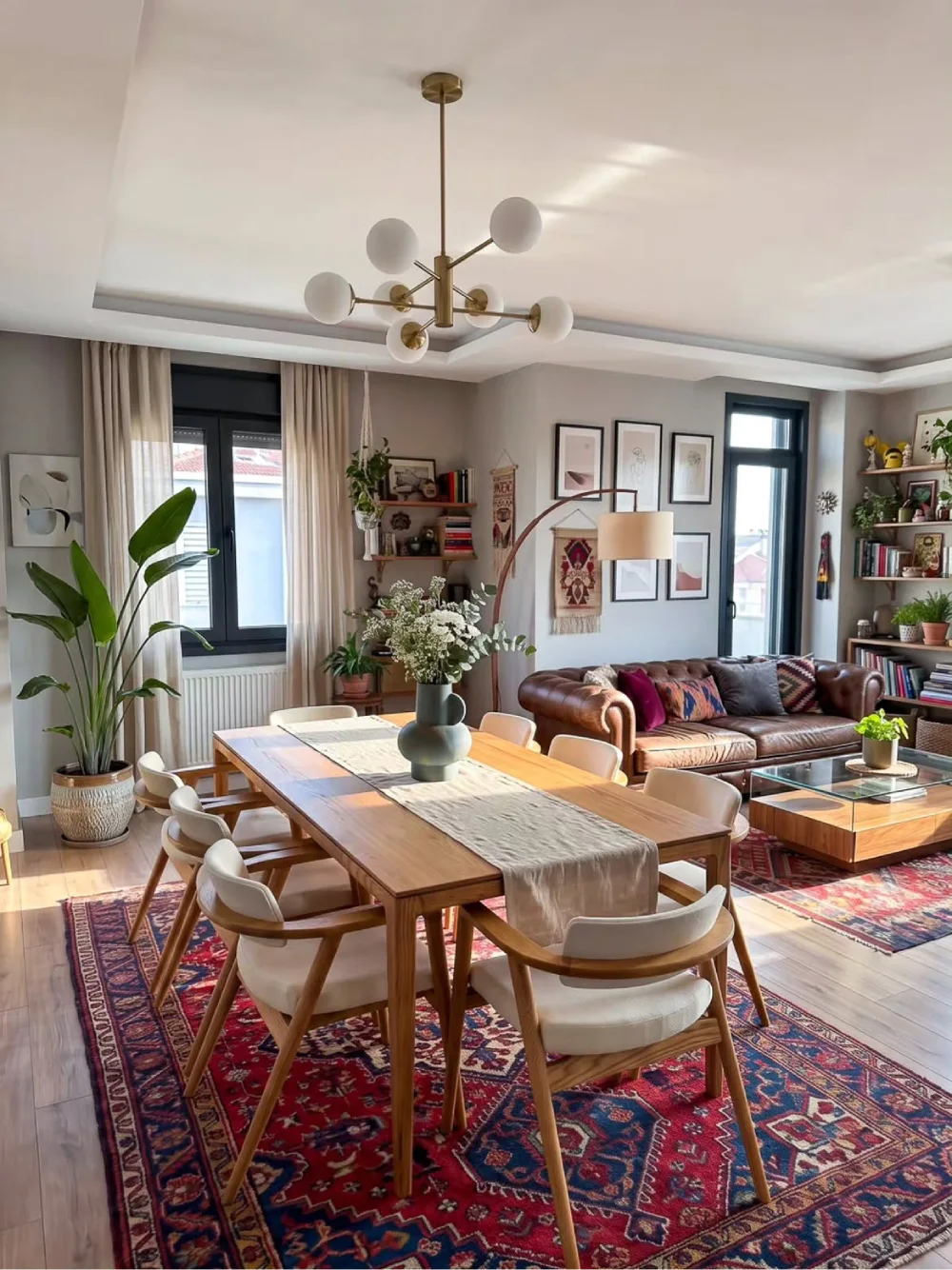
A long wood dining table naturally bridges the dining and living areas in this inviting open layout. The patterned rug adds warmth and definition, while the matching wood tones help both spaces feel comfortably connected.
Keep the Layout Light and Airy
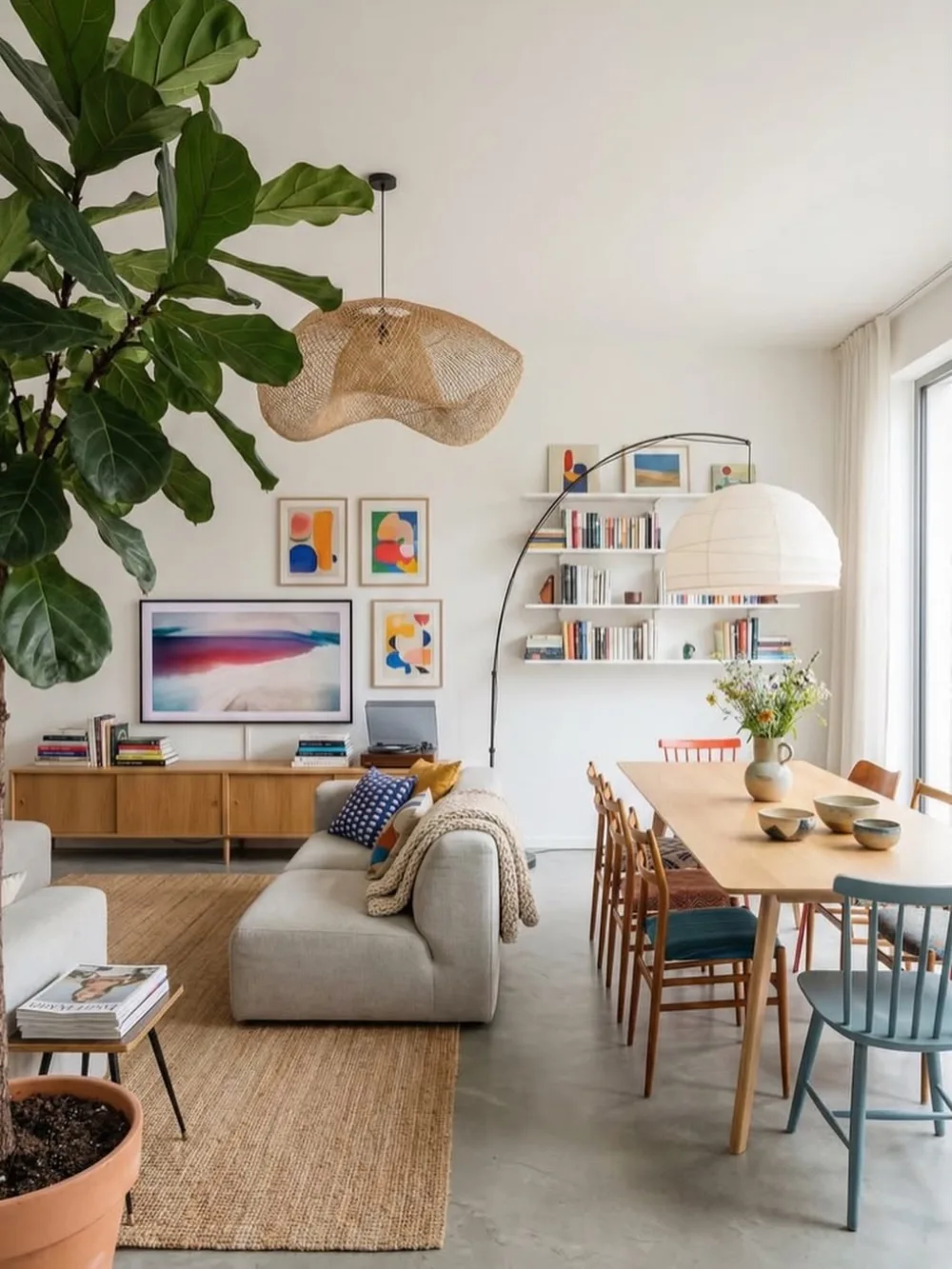
Keeping furniture visually light can make an open dining area feel spacious rather than crowded. A simple wood table, colorful chairs, and natural textures create an easy transition between the dining and living zones.
Blend Dining With Family Life
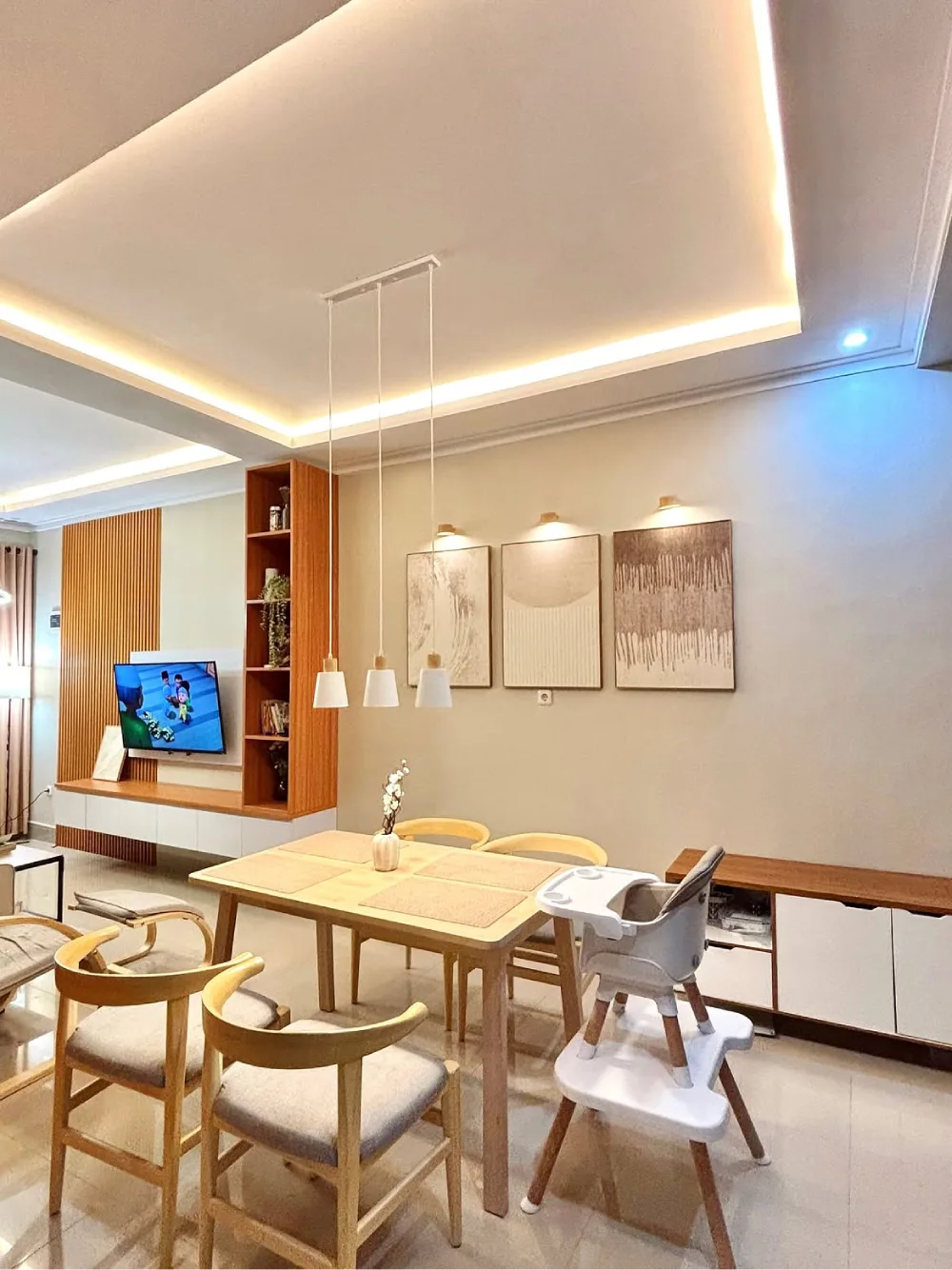
An open dining area works especially well when it needs to accommodate everyday family life. The generous table leaves room for shared meals, while nearby storage and comfortable seating keep everything within easy reach.
Take Advantage of Natural Light
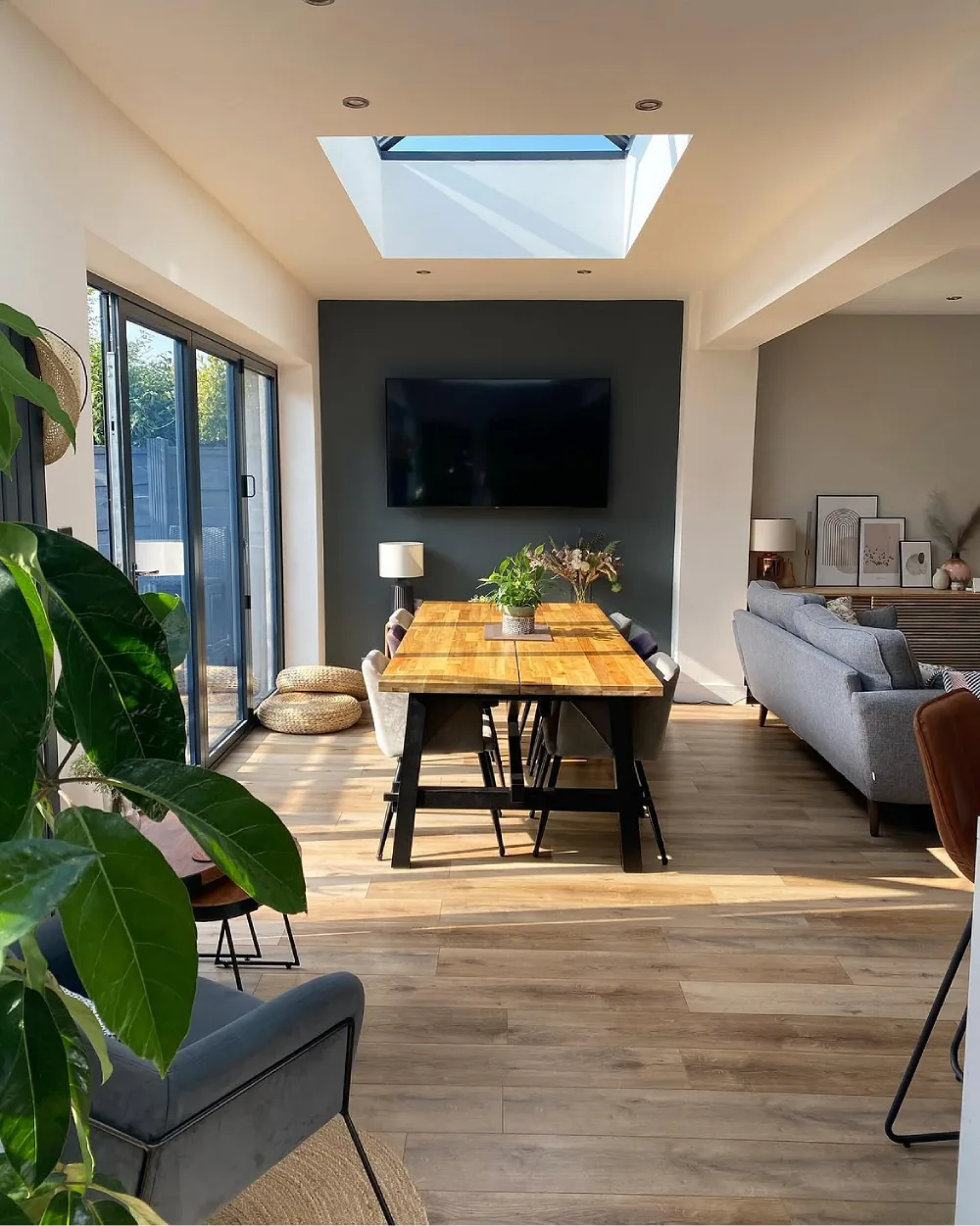
Natural light can make the dining area feel like a seamless extension of the living room. Positioning the table near large glass doors and a skylight brings brightness deep into the shared space.
Define Dining With a Built-In Bench
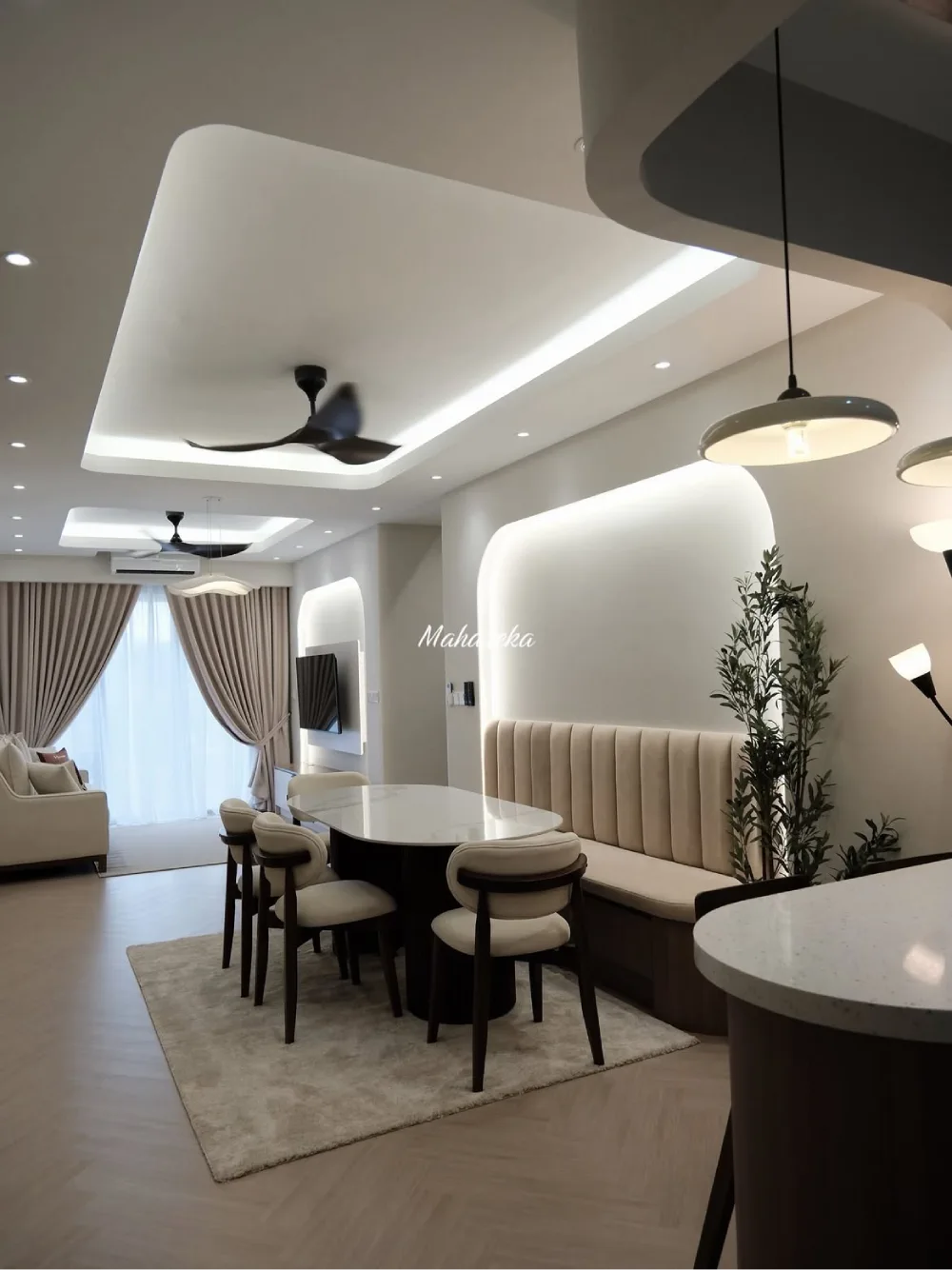
A built-in dining bench can define the eating area without adding visual bulk. Here, the curved table, upholstered seating, and soft lighting create a distinct dining zone while maintaining an open connection to the kitchen and living room.
Embrace a Bold Color Contrast
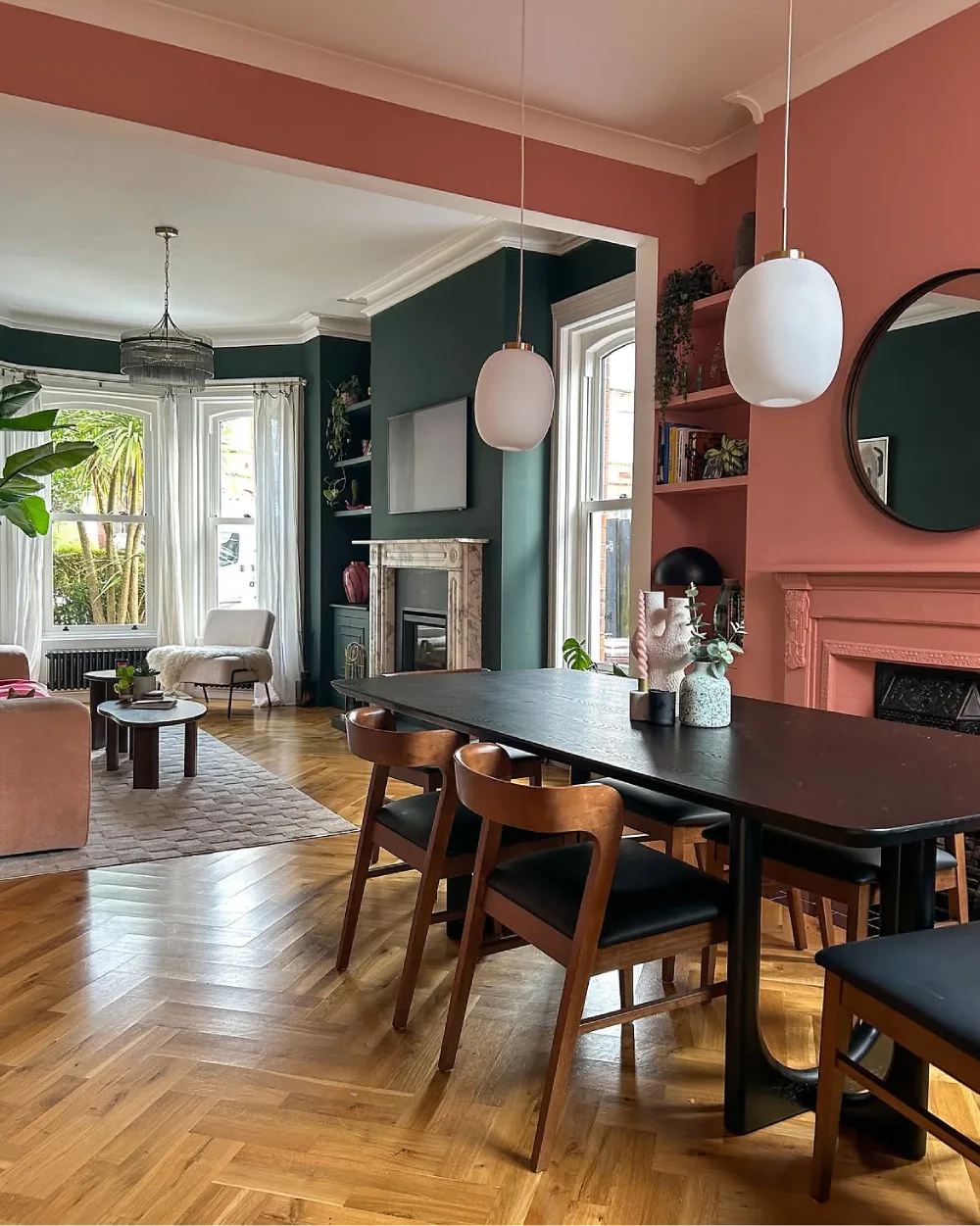
Bold wall colors can give an open dining area its own personality without closing it off from the living room. The dark table and warm wood floor help bridge the contrasting colors across both spaces.
Keep an Open Room Soft and Neutral
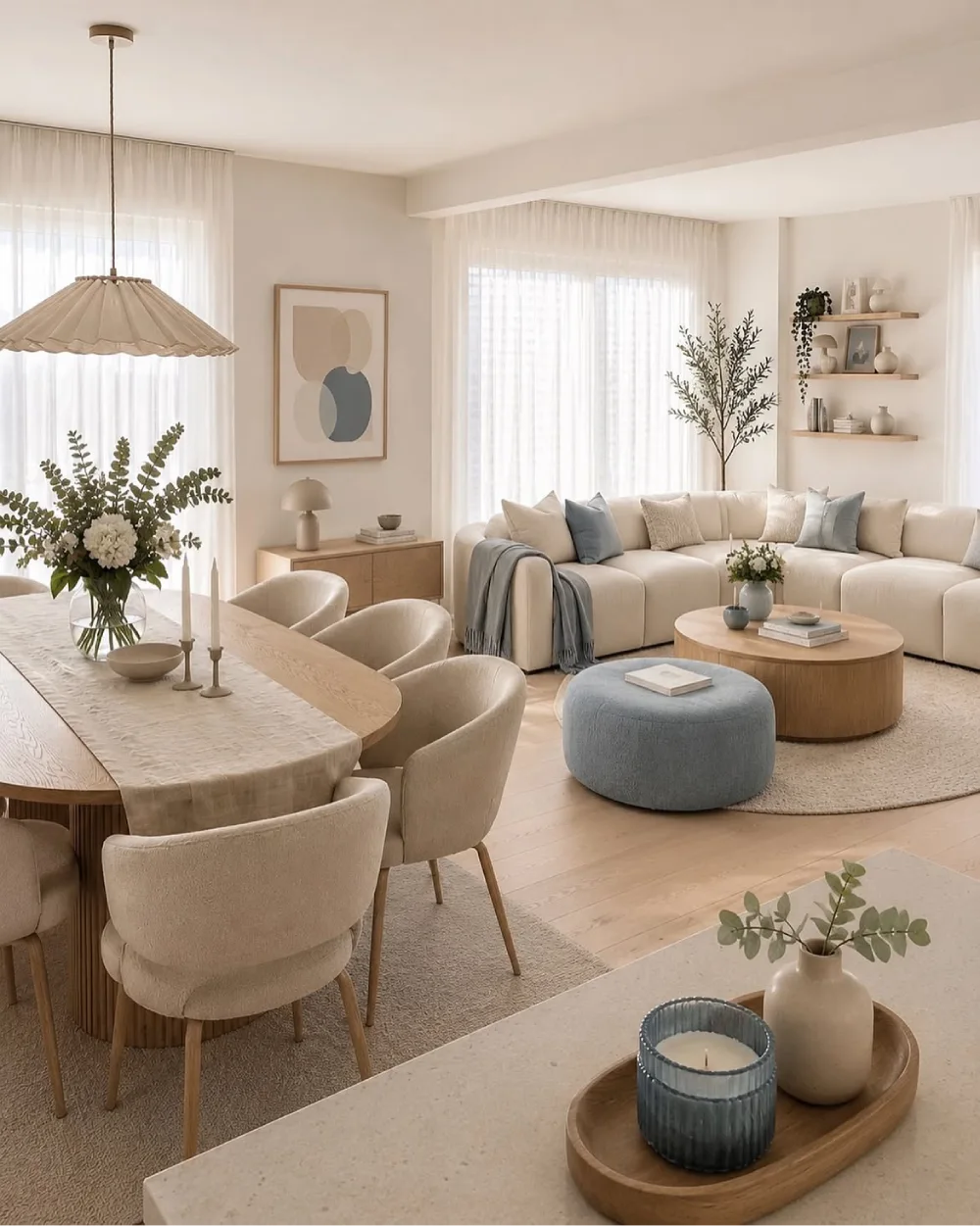
Soft neutrals make it easy for a dining room and living room to share one visual palette. Cream upholstery, pale wood, and subtle blue accents keep the space feeling calm while giving each zone enough definition.
Connect the Kitchen and Dining Area
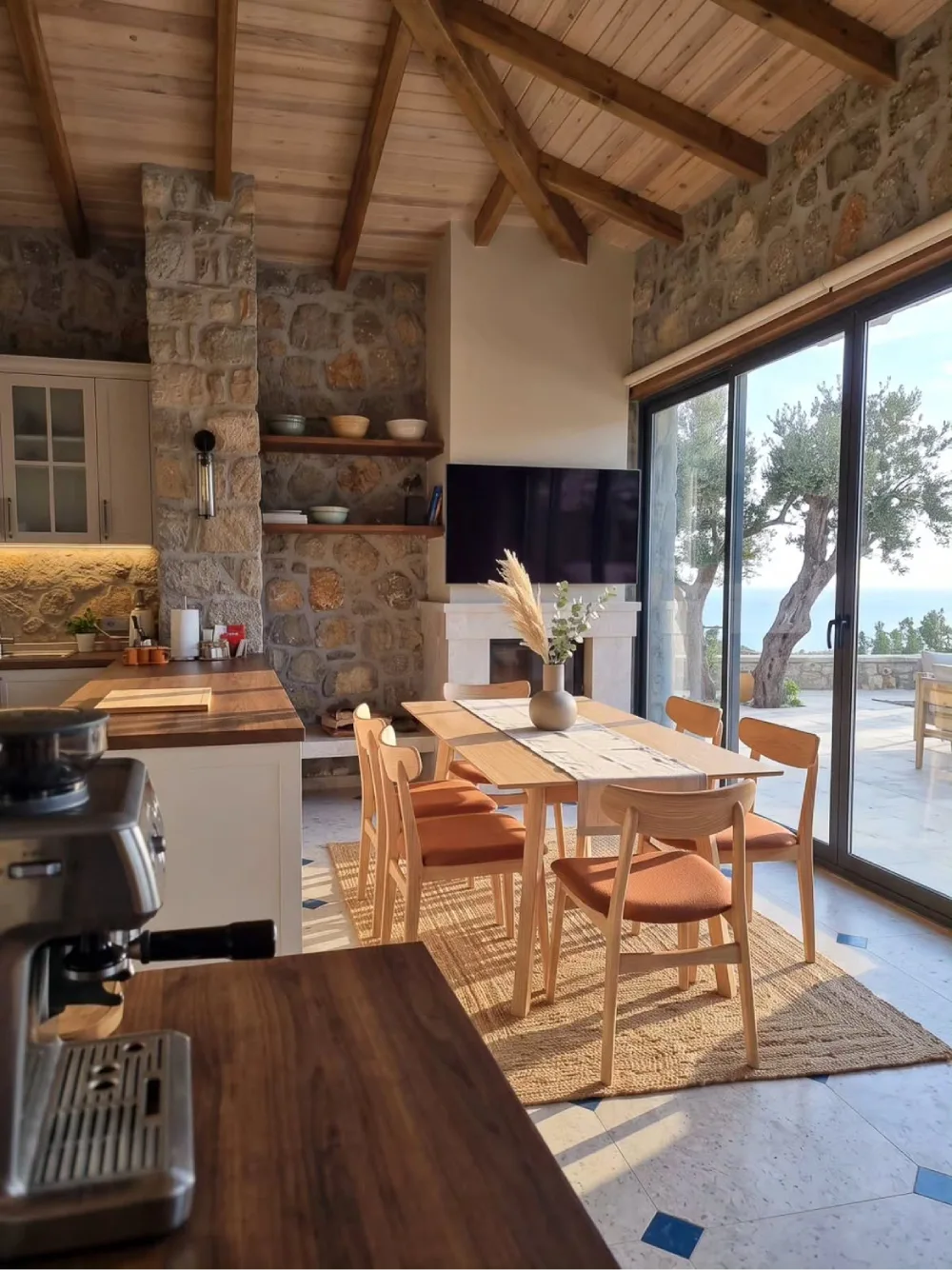
When the dining table sits close to the kitchen, everyday movement feels much more natural. Repeating warm wood finishes across the cabinetry and dining furniture helps the two areas read as one cohesive space.
Use Furniture to Shape the Layout
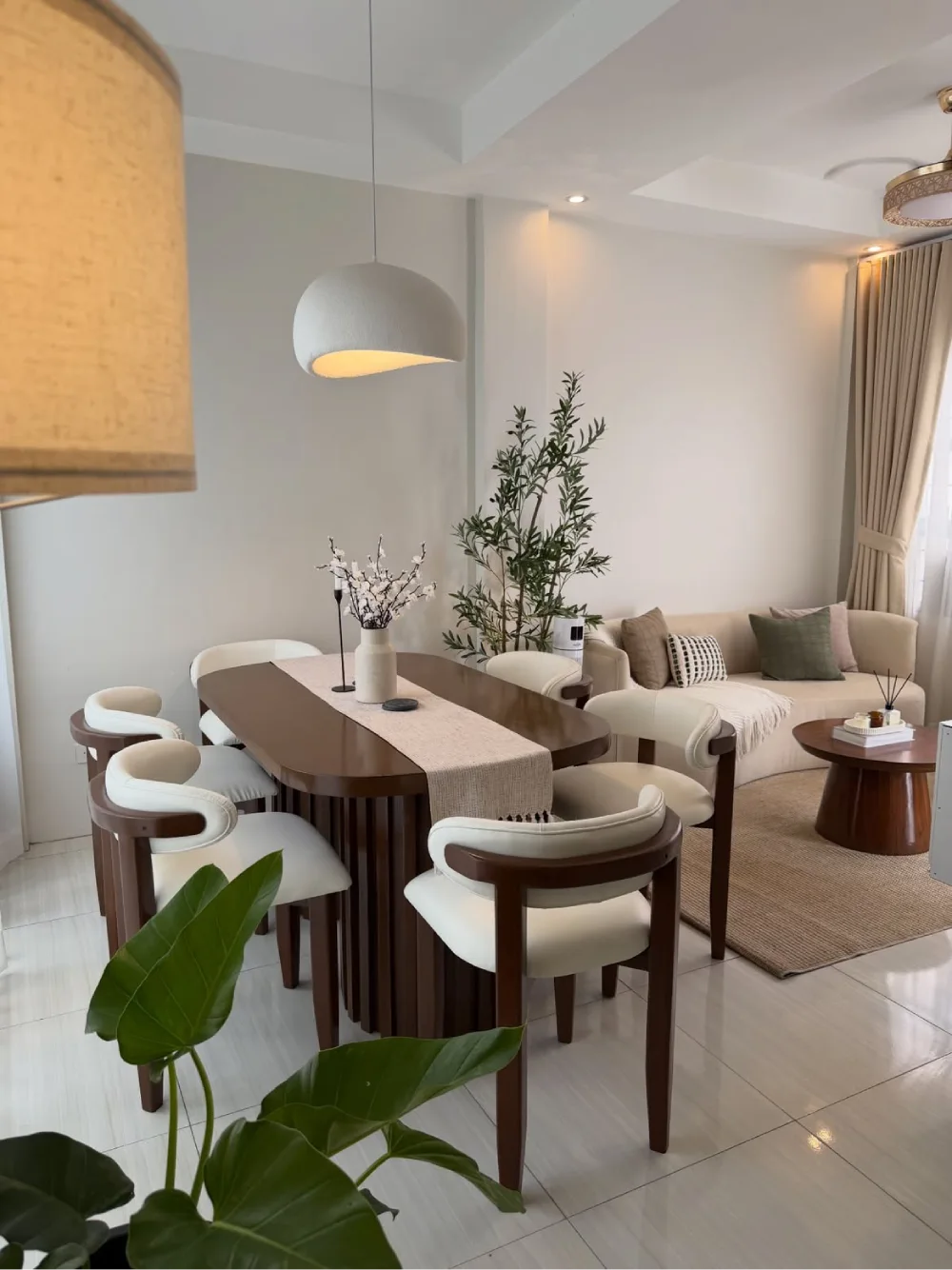
A dining table can quietly define where one zone ends and another begins. This rounded wood table and coordinated seating create a clear dining area while keeping the adjoining living room open and easy to move through.
Bring the Outdoors Into the Layout
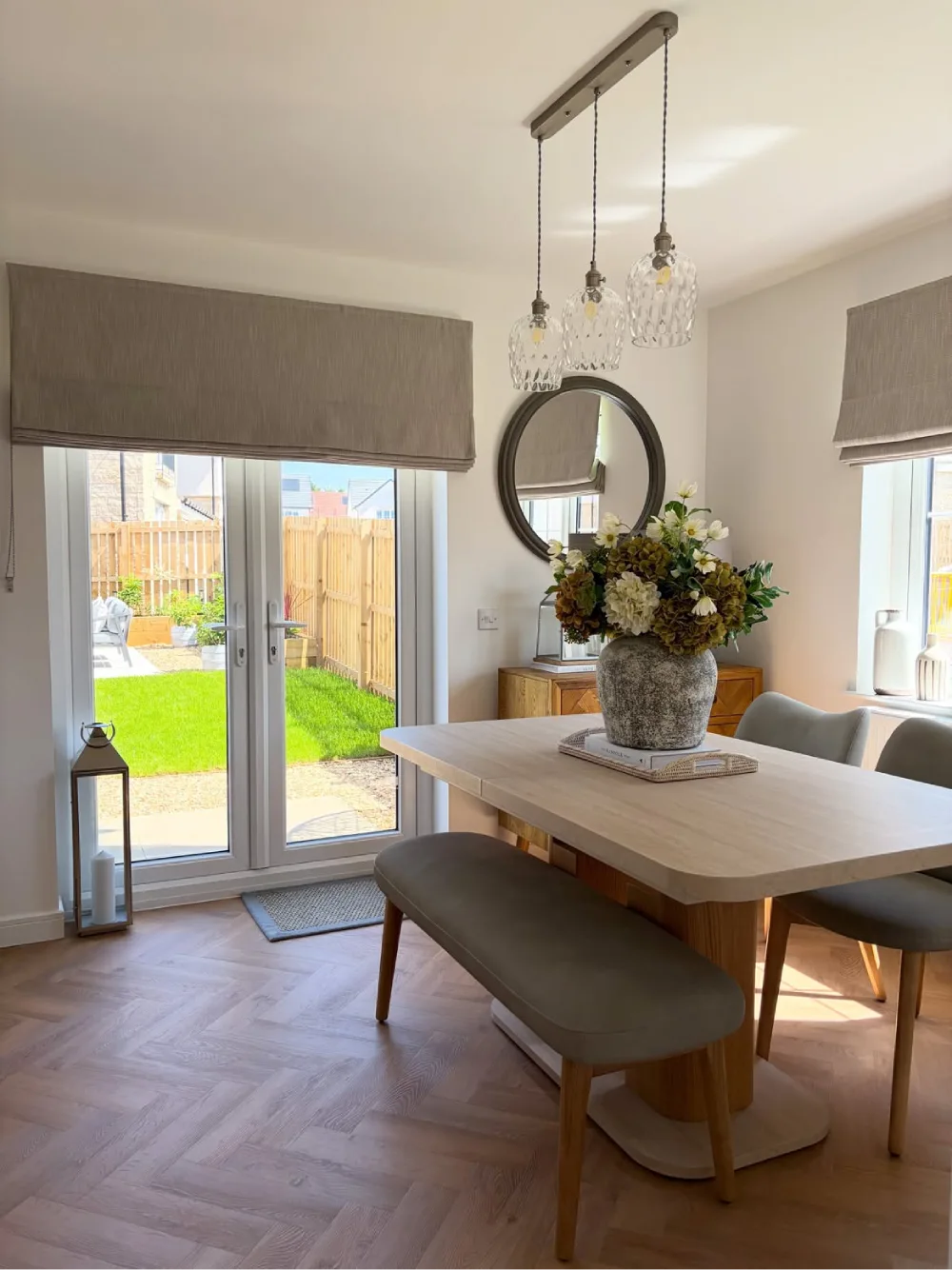
Positioning the dining area near glass doors creates a strong connection with the outdoors. A pale wood table, upholstered bench, and simple pendant lights keep the room bright, relaxed, and visually connected.
Connect Dining and Living With Color
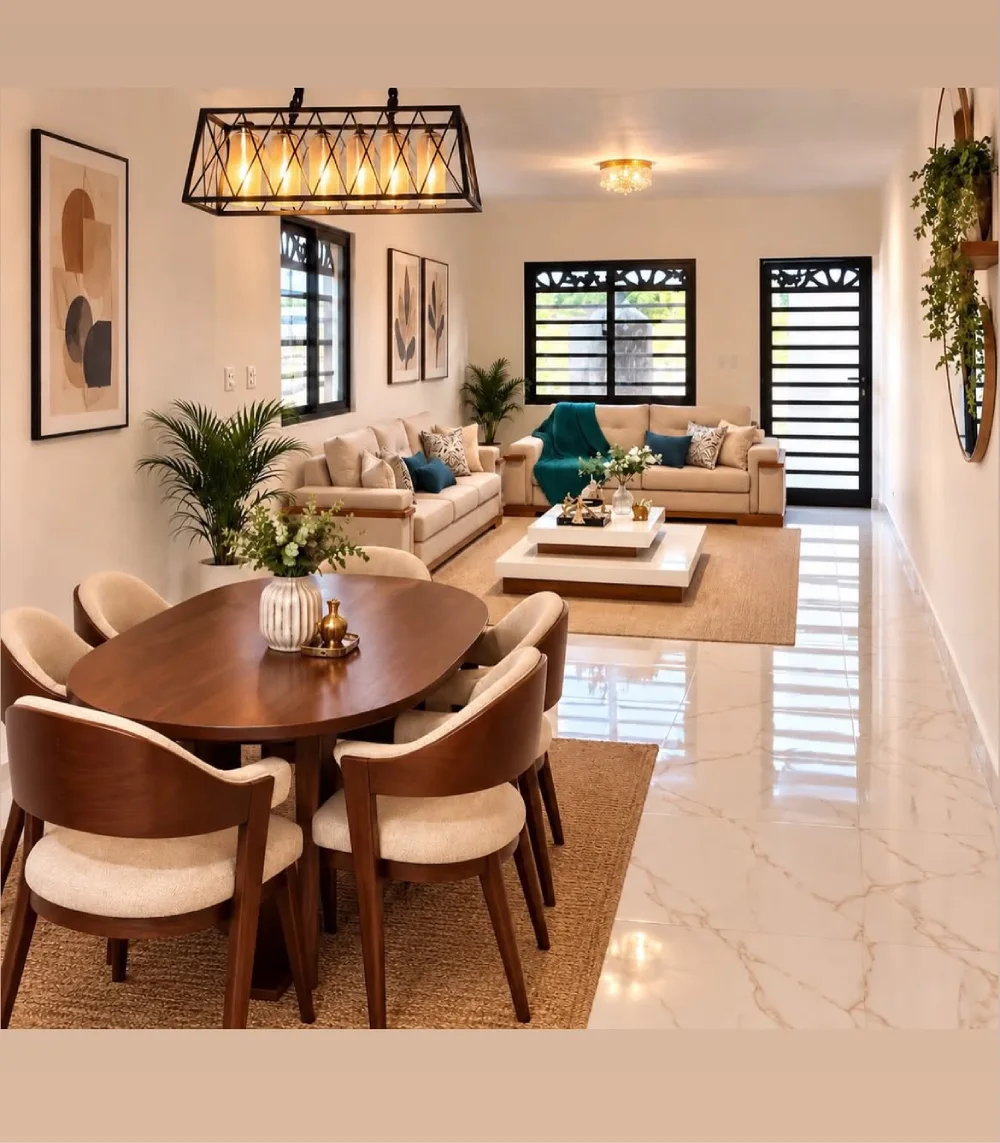
A round dining table creates a natural gathering spot in this open room, while the matching warm wood tones carry into the living area. Teal cushions add a subtle thread of color that ties both spaces together.
Create a Refined Dining-Living Flow
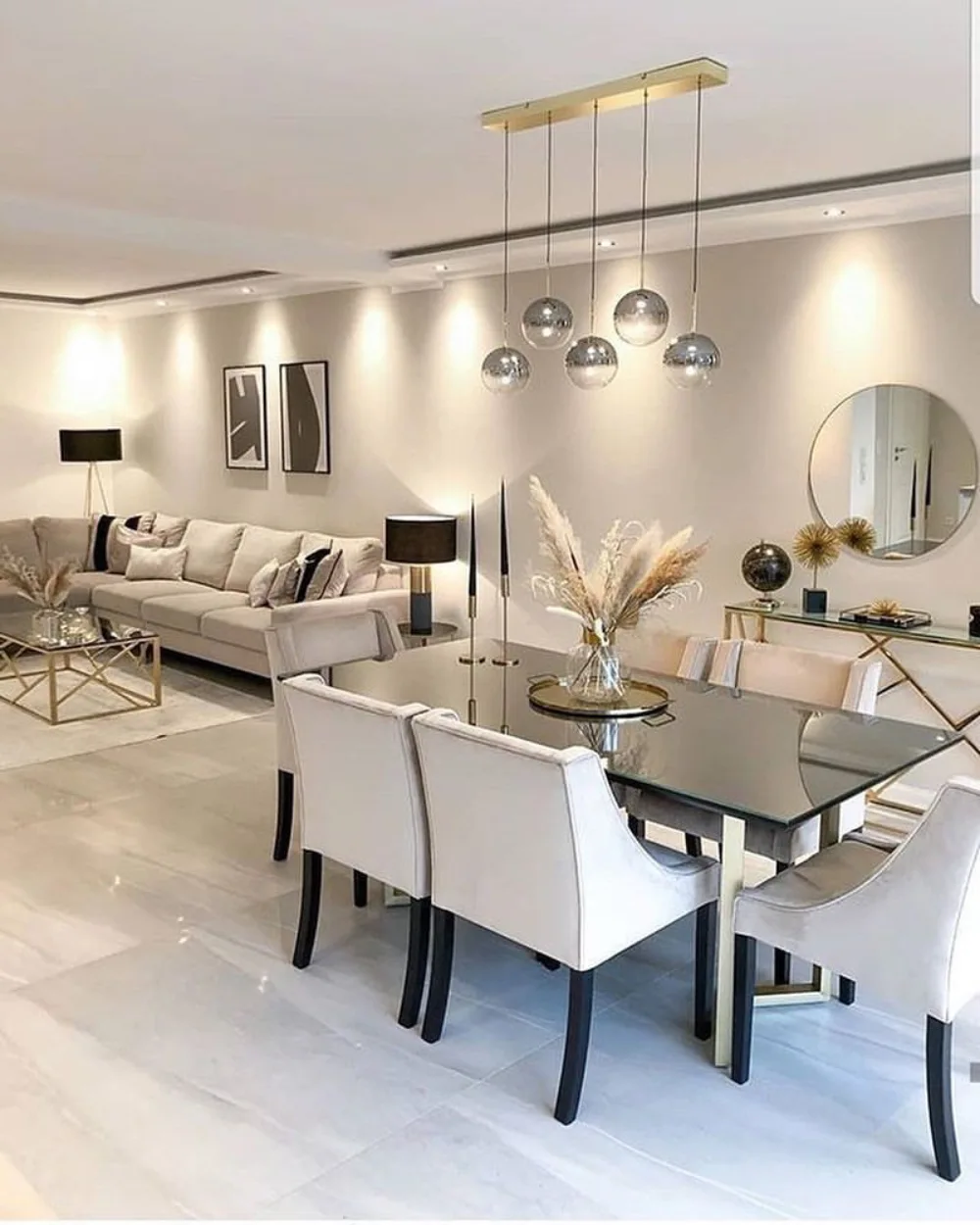
A glass dining table keeps this shared space feeling light and open. White upholstered chairs, a neutral sofa, and reflective pendant lights create a consistent palette that allows the dining and living areas to flow together.
Keep the Dining Area Open and Bright
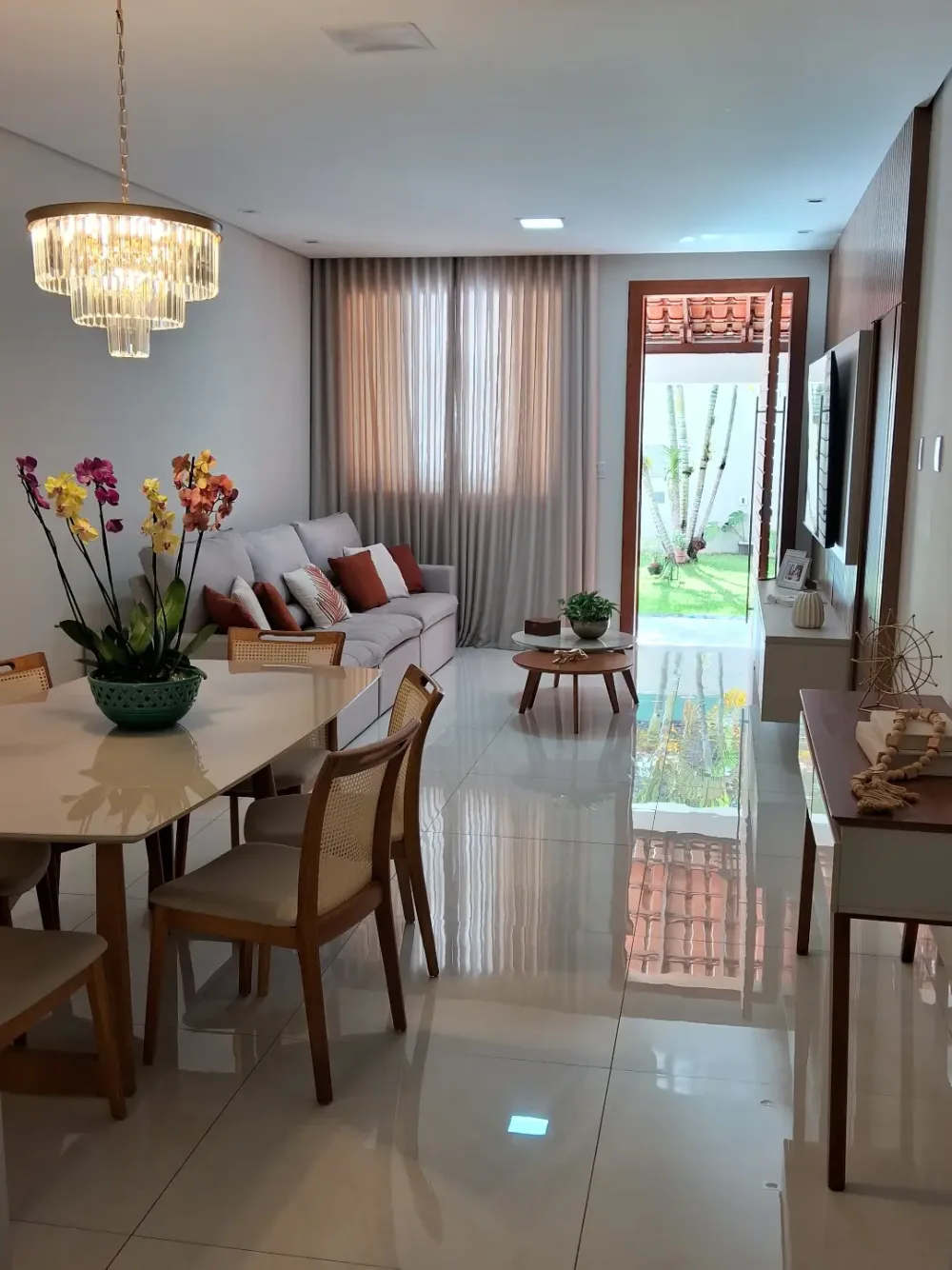
The dining area shares an uninterrupted floor with the living room, making the entire space feel spacious and connected. Large windows bring in natural light, while the chandelier gives the dining zone a clear focal point.
Keep the Kitchen Within the Dining Zone
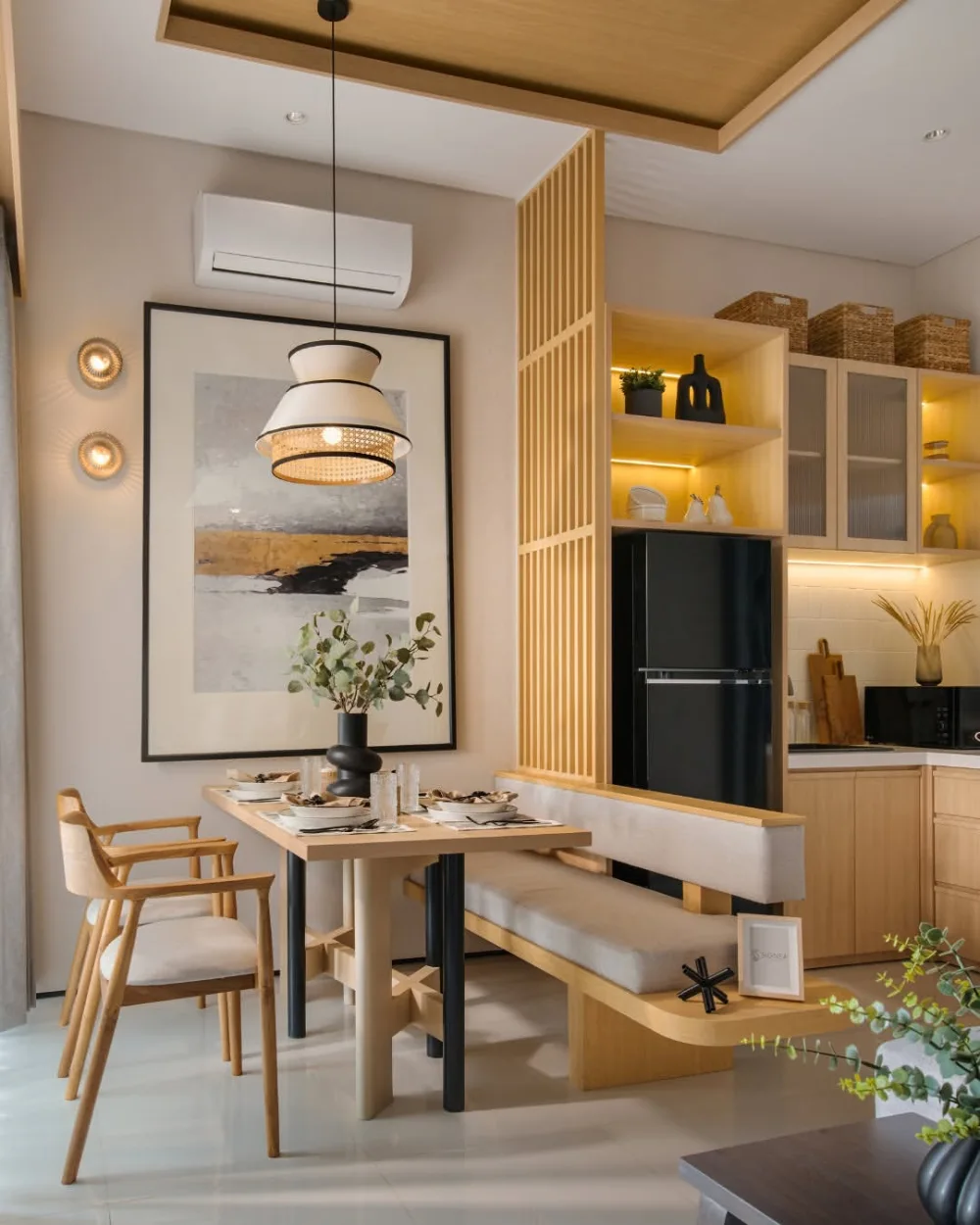
This layout places the dining table directly alongside the kitchen, making the connection between preparing and enjoying meals especially clear. A slatted wood divider adds separation while keeping the two areas visually open.
Let Garden Views Extend the Dining Room
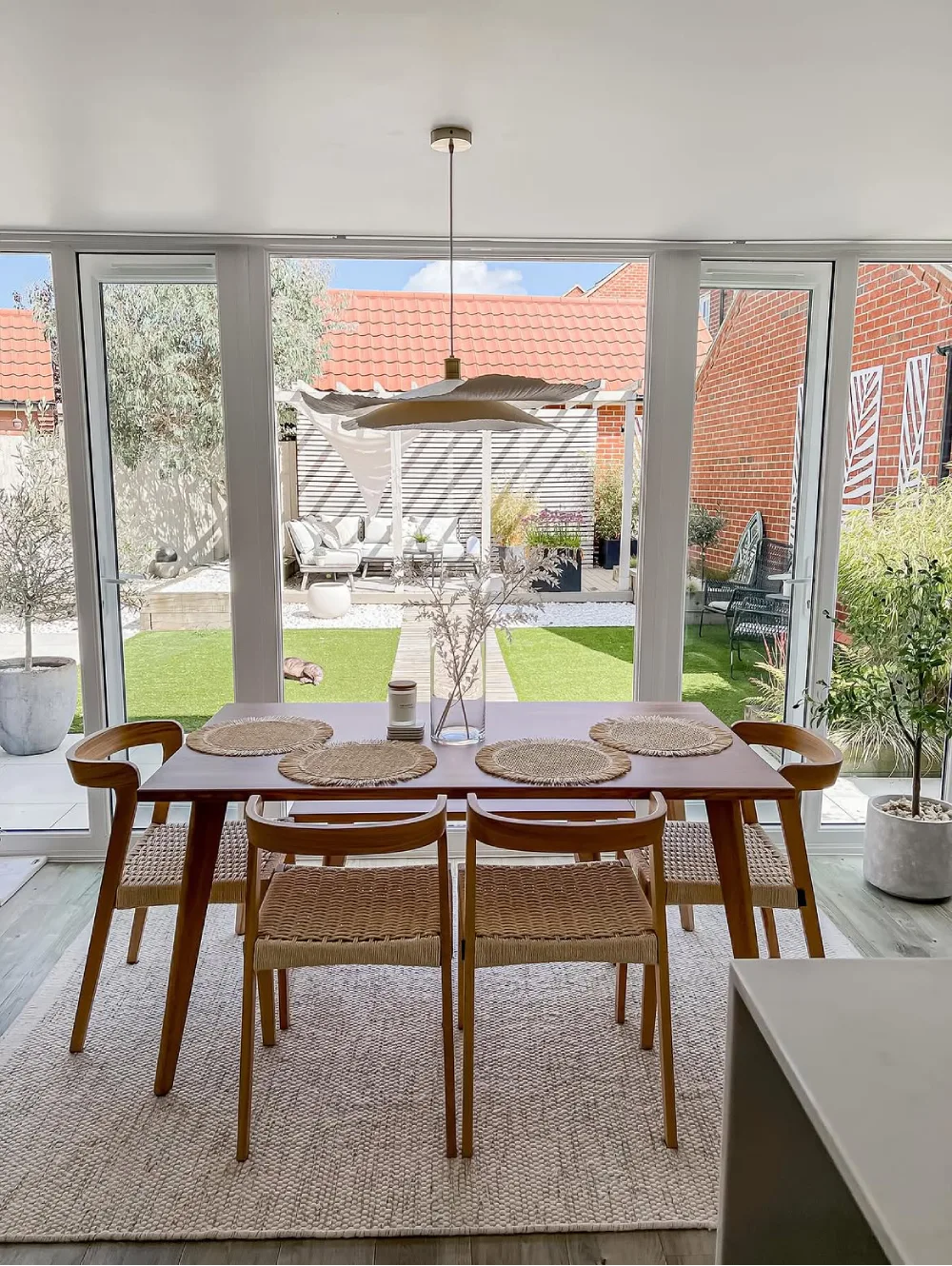
Large glass doors make the garden feel like an extension of this dining area. The wood table, woven chair seats, and natural textures reinforce that connection, while the simple layout keeps the room open and uncluttered.
Highlight a Vaulted Dining Ceiling
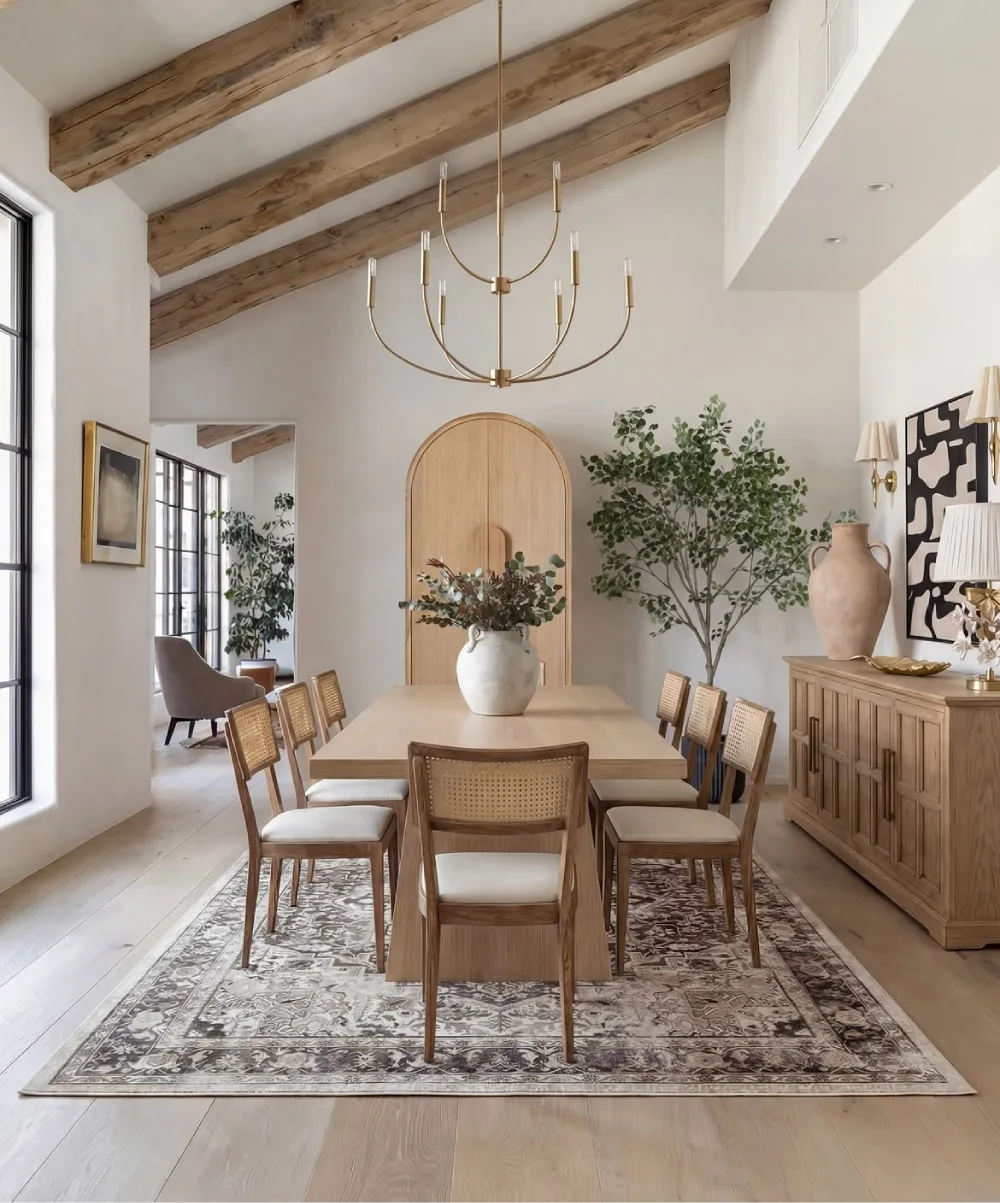
Exposed wood beams give this dining room plenty of character without making it feel heavy. The light wood table and woven chairs echo the ceiling, while the delicate brass chandelier adds a polished finishing touch.
Bring Cottage Charm to the Dining Room
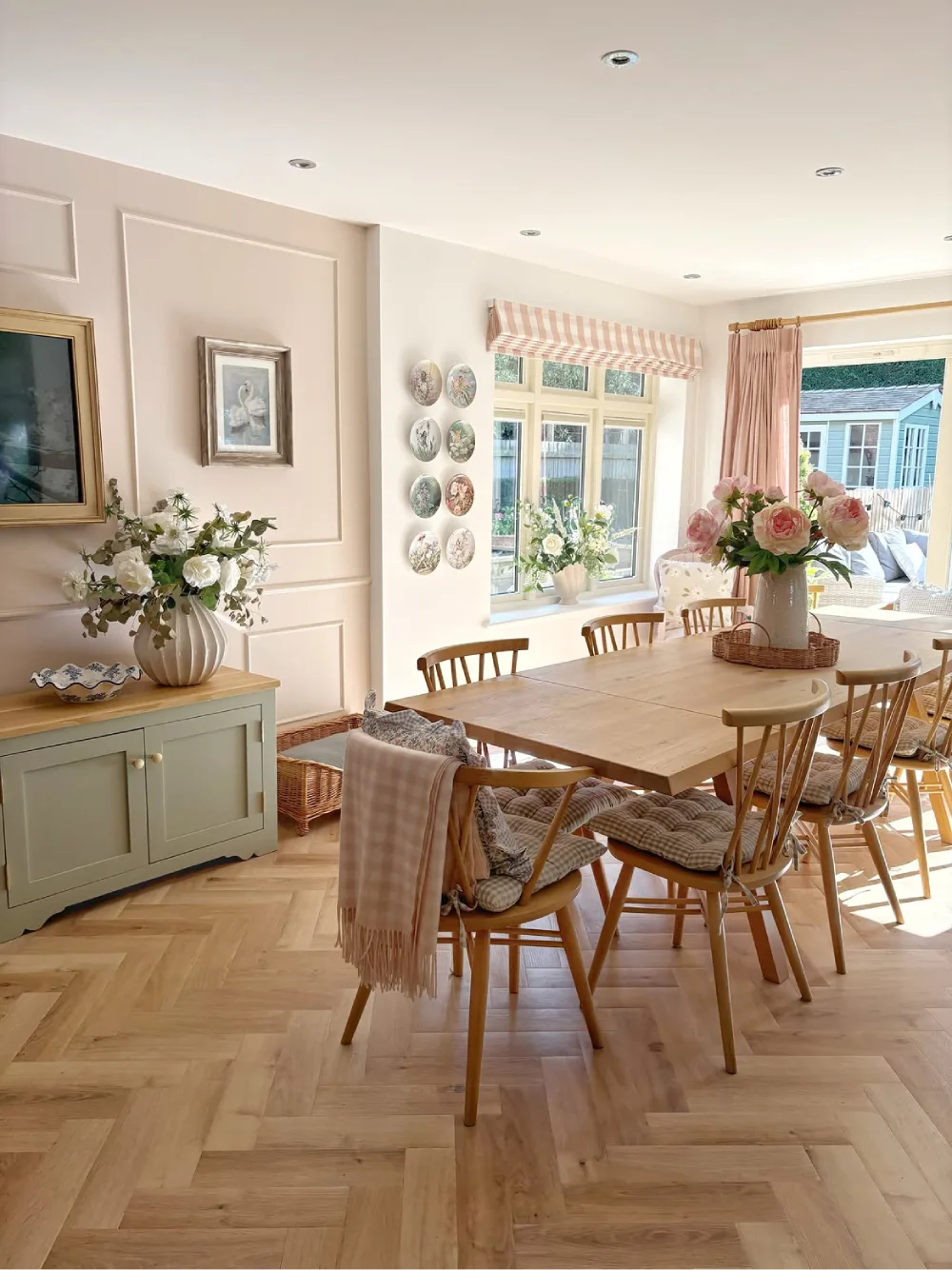
Soft colors, natural wood, and fresh flowers give this dining room an inviting cottage feel. The decorative plates on the wall and patterned window shade add another layer of charm without taking attention away from the generous dining table.
Use Natural Textures in an Open Dining Space
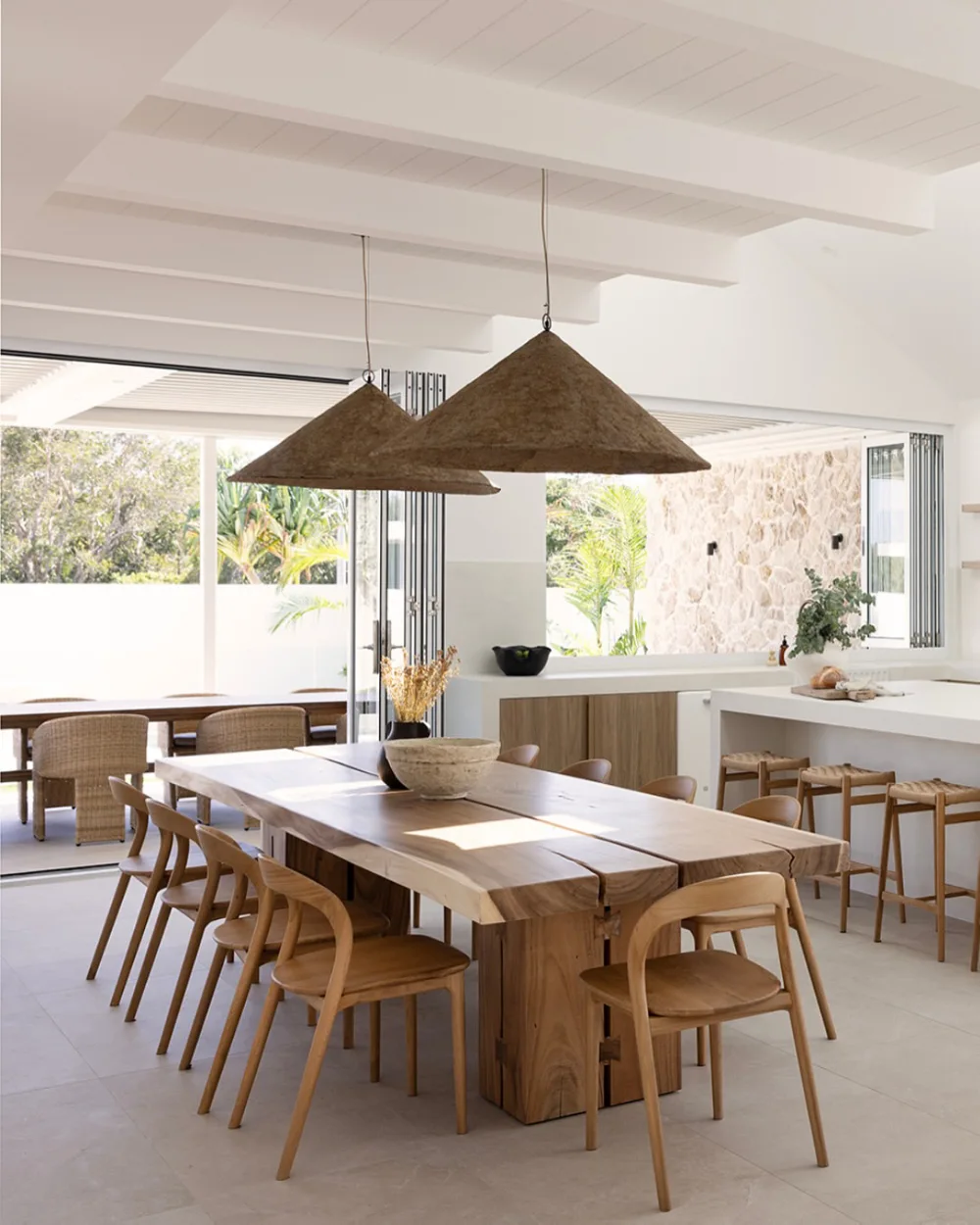
A substantial wood table anchors this bright open-plan dining area, while woven pendant shades bring warmth overhead. The surrounding white kitchen and large openings keep the room feeling airy and connected to the outdoors.
Add Contrast With Upholstered Dining Chairs
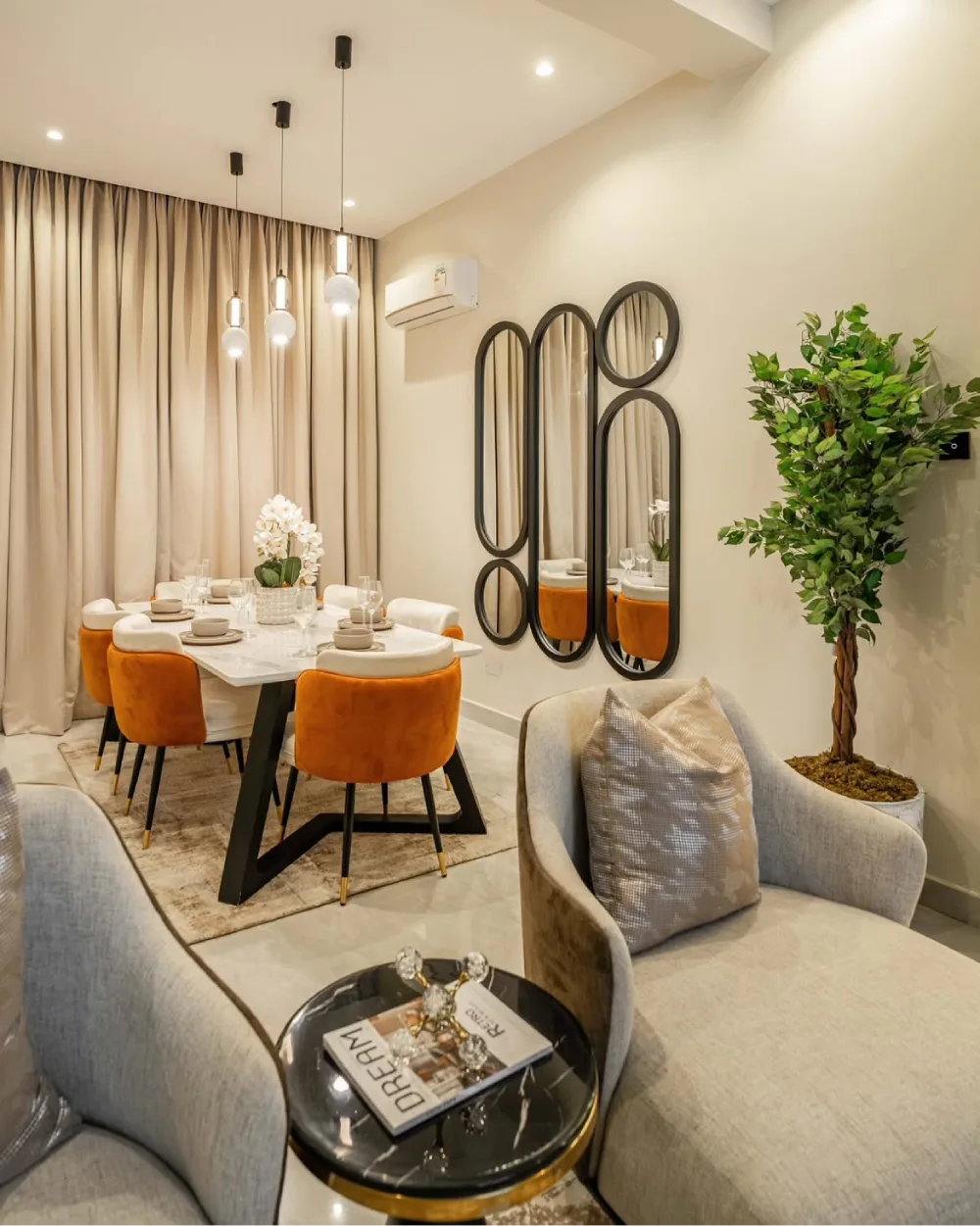
Bright orange dining chairs create a strong focal point against the soft neutral walls and curtains. The group of black-framed mirrors adds visual interest, while the simple pendant lights keep the dining area feeling contemporary.
Pair a Wood Dining Table With Blue Cabinets
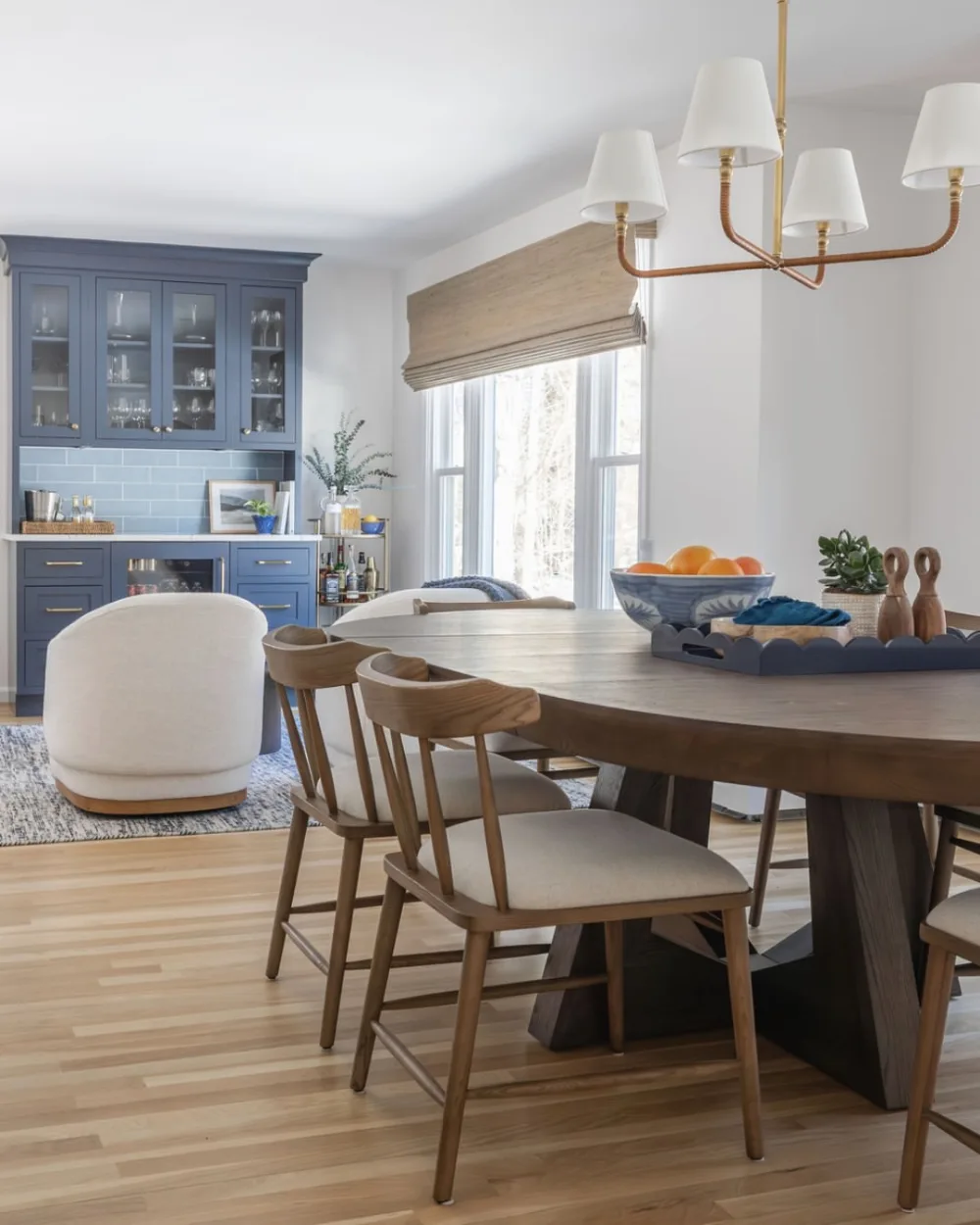
The deep blue kitchen cabinetry gives this dining area a clear color accent without overwhelming the warm wood furniture. A large table provides plenty of seating, while the soft upholstery keeps the space comfortable and relaxed.
Create a Breezy Coastal Dining Nook
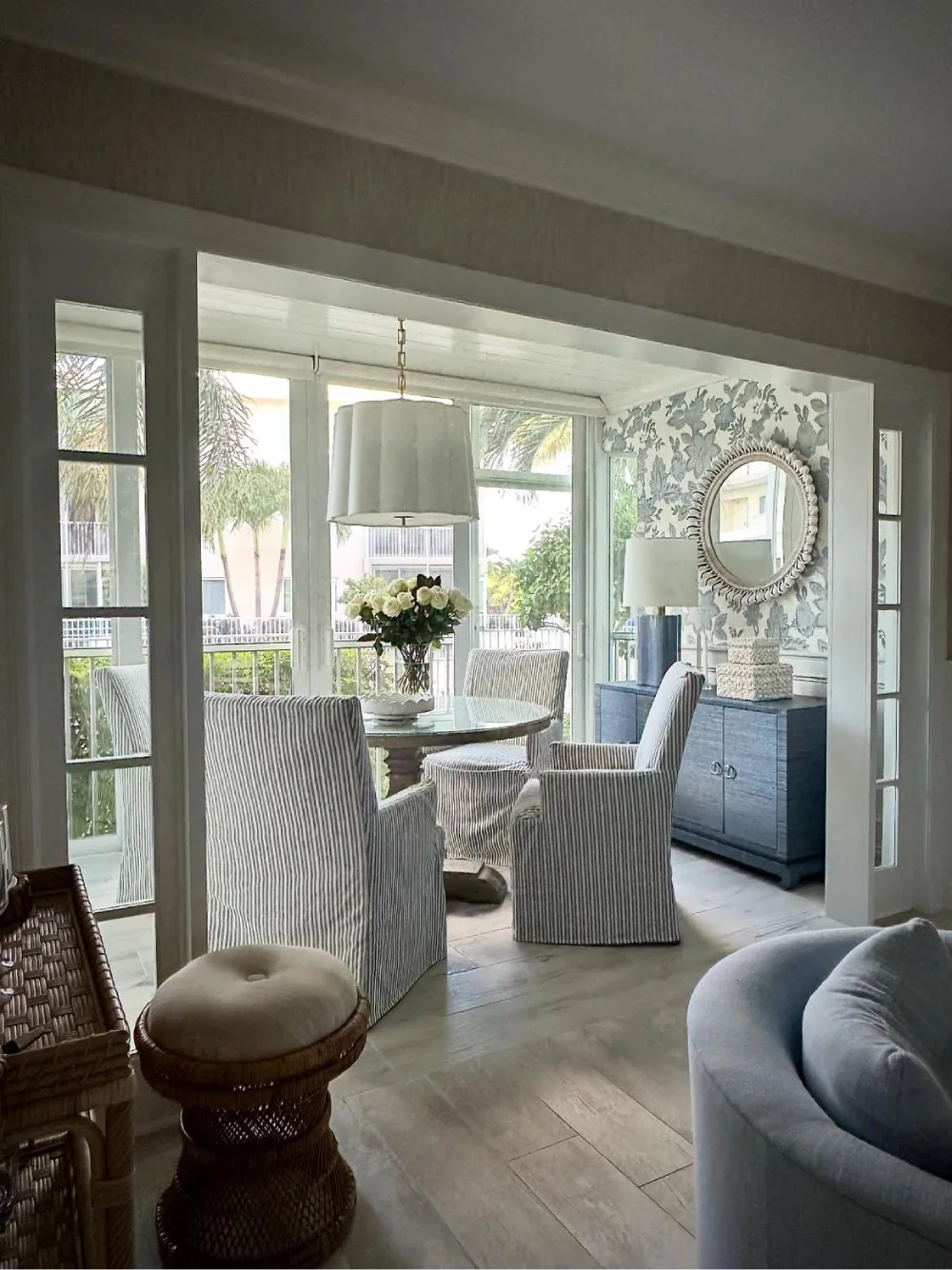
Blue and white details give this dining space a relaxed coastal character. The striped slipcovered chairs, floral wallpaper, and blue sideboard work together around the round table, while the large windows bring in plenty of daylight.